The Early Years: London Stereoscopic Company & Camera Club
Reinhold returned to London in 1880 at the age of 23, lodging in the Merifield Household at 61 Herbert Street, Newham, with the promise of a new role as a water-colour artist, tinting photographs for the London Stereoscopic & Photographic Company.
The Merifield Household was a busy and bustling one, with at times, up to eleven people cramped into a relatively small Victorian terraced house. James, the head of the household, was a carpenter by trade, and rented rooms to lodgers, such as Reinhold, to cover the costs of a household that included three young daughters and his elderly in-laws, who had been a family of blacksmiths.
During his time there, at least one other lodger is known, a Richard Gersten (1855-1935), a furrier by trade who would go on to emigrate to the United States. Although, perhaps most interestingly for this family, they were able to afford a young German maid.
Reinhold would continue to stay at the Merifield Household for about four years, but the friendships may have continued on long after this, as the daughter Edith would go on to marry a contemporary of Reinhold’s, the photographer Edwin Miler (1864-1922), in 1893.
London Stereoscopic Company
The company had first been founded in 1854 by cousins George Swan Nottage (1823-1885) and Howard John Kennard (1829-1896). They had initially opened shop at 313 Oxford Road, London, under the name of The Repository of Art, and intended to sell bronzes from Kennard’s foundry, the Falkirk Iron Works. Although perhaps best known at the time for the munitions he was supplying for the Crimean War, Kennard also focused on highly decorative bronzed ironwork and would showcase this with his cousin at their Oxford Road store.
Their step into the world of photography would come with Nottage’s decision to showcase a series of steroviews in the shop window, these reportedly sold so well that they took over as the primary focus of the shop. The business rapidly grew and they expanded to a second location at 54 Cheapside and renamed the company, and by 1856 boasted the largest collection of stereoviews in Europe, with over 10,000 in their catalogue.
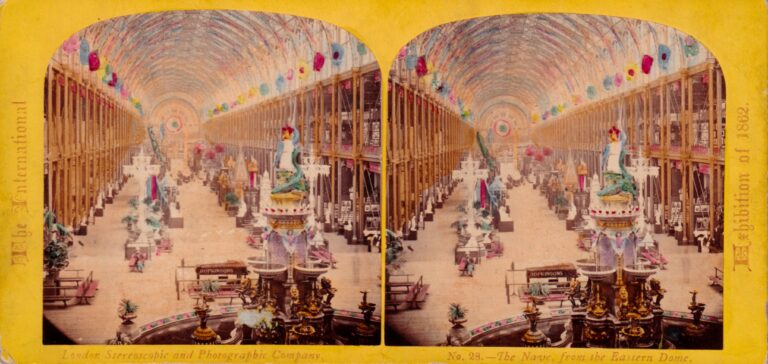
Steroview produced by the LSC showing The International Exhibition of 1862. This steroview is tinted, showcasing the type of work Reinhold would have been performing for the company. Reinhold Thiele Family Archive
Although sadly somewhat forgotten today, the LSC was a major player in the field of early photography and would attract major talent; with names such as William England (d.1896), William Russell Sedgfield (1826–1906), and Robert Howlett (1831-1858) who was responsible for the iconic “Isambard Kingdom Brunel Standing Before the Launching Chains of the Great Eastern” photograph.
Of these, special mention should be paid to Thomas Richard Williams (1824-1871), the now celebrated stereographic daguerreotypes who’s largely forgotten work for the LCS was rediscovered, researched and published on by Dr. Brian May and Elena Vidal.
By the time Reinhold joined as a water-colourist to tint and add colour to their monochrome photographs in 1880, the business had greatly expanded, and were now trading from 54 Cheapside and 108 & 110 Regent Street,
An opportunity came in 1884 when Chief Operator Ladislas Nievsky (d.1901) left the large Regent Street Studio to focus on the Cheapside Studio, and the role was offered to Reinhold. This was significant, as a chief operator was the most senior position in a studio like this after the proprietor, being the skilled technician who ensured a large site like Regent Street could run.
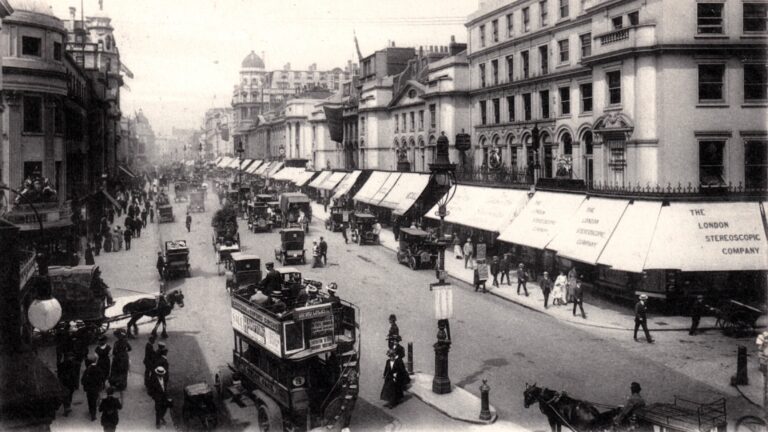
Photograph of the London Stereoscopic Company’s 108 & 110 Regent Street Studio, which Reinhold would run as it’s Chief Operator from 1884 to 1890. Reinhold Thiele Family Archive.
He had a hard act to follow, his predecessor, Nievsky, real name Ladislas Wisnevsky, was the designer of several types of ferrotype cameras, and had part-ownership of the famed French photographer, Nadar (1820-1910)’s 35 Boulevard des Capucines Studio, which had famously been the location of the First Impressionist Exhibition. On 22nd May 1884, during his move to the Cheapside Studio, Nievsky would go on to sell his share in Nadar’s studio to the photographer Eugène Maurice (1825-1891) for 10,700 francs.
Some Reinhold’s success in moving from watercolourist to Chief Operator in just four years may have come from his close relationship with the company owner Nottage, who had recently become the Lord Mayor of London. On Nottage’s death in 1885, Reinhold would be sat in the second coach in his funeral procession to St Paul’s Cathedral.
Marriage & Family
With his promotion to Chief Operator, Reinhold would propose to the love of his life, Eleanor Mary Harriet Lily Rowbothom (1864-1914), marrying on 29th June 1884 in the Leytonstone Parish Church.
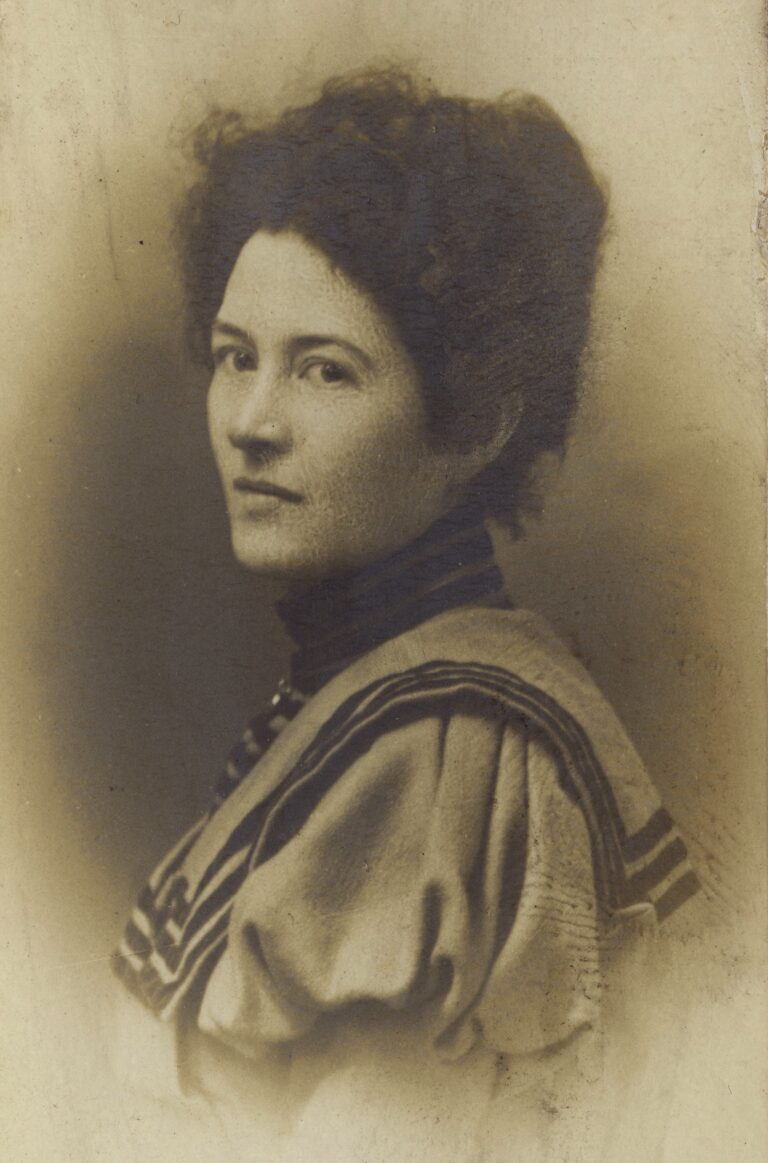
Photograph of Eleanor Mary Harriet Lily Rowbothom (1864-1914). Taken by Reinhold in his Cheapside Studio in about 1896. Reinhold Thiele Family Archive.
Where Reinhold was oft described by those who knew him as “not very tall, but well built, [and] robust”, Lily was tall, with high cheekbones and a head of thick, dark wavy hair. She was both well-educated and extremely well-travelled, having had spent much of her childhood first in Aden and then India, moving between Pune, Belagavi, and Mumbai.
Lily was the daughter of Daniel Booth Rowbothom (1828-1882) and Catherine Elizabeth McIntosh (b.1830). Catherine was from a military family and the newly widowed mother of three young children when she met Daniel at Fort Hare, South Africa in 1854. Daniel was at the time a Hospital Sergeant serving as part of the Eighth Xhosa War, who would later progress to being the Quartermaster-Sergeant of the 1st Battalion of the Queen’s Royal Regiment.
Catherine’s position would have been both dire. At the time of her first husband’s death, there were no protections offered to military widows, and she would have been left cut-off and with little to no access to supplies for herself or her young children. The marriage to Daniel would have offered her security, and as his position increased, her status within the camp increased with it.
The marriage would result in a further five children, including Lily, and the family would move following wherever Daniel was stationed. Daniel would pass away at Aldershot in 1882 and it is not clear what happened to Catherine, last appearing in the records in Mumbai in 1870.
It is not clear what had led Lily to London or how she met Reinhold, but she was living on the outskirts of the busy Rotherhithe docks when they met. On marrying, they would move in together at 2 Elm Villas, Hainault Road, London, and a little over a year later, they would welcome Percy, the first of nine children.
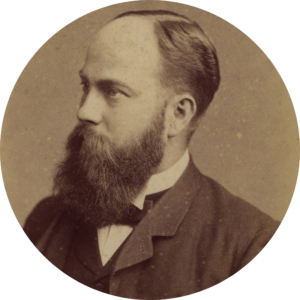
It seems the family were doing well financially and would travel regularly throughout the 1880s and 1890s, their second son Carl being born on a trip to Germany to visit family in 1892. They also followed classic middle-class Victorian pursuits, such as holidays to the seaside, a photograph of a young Reinhold taken at the scenic Irish seaside resort of Warrenpoint, illustrates this perfectly.
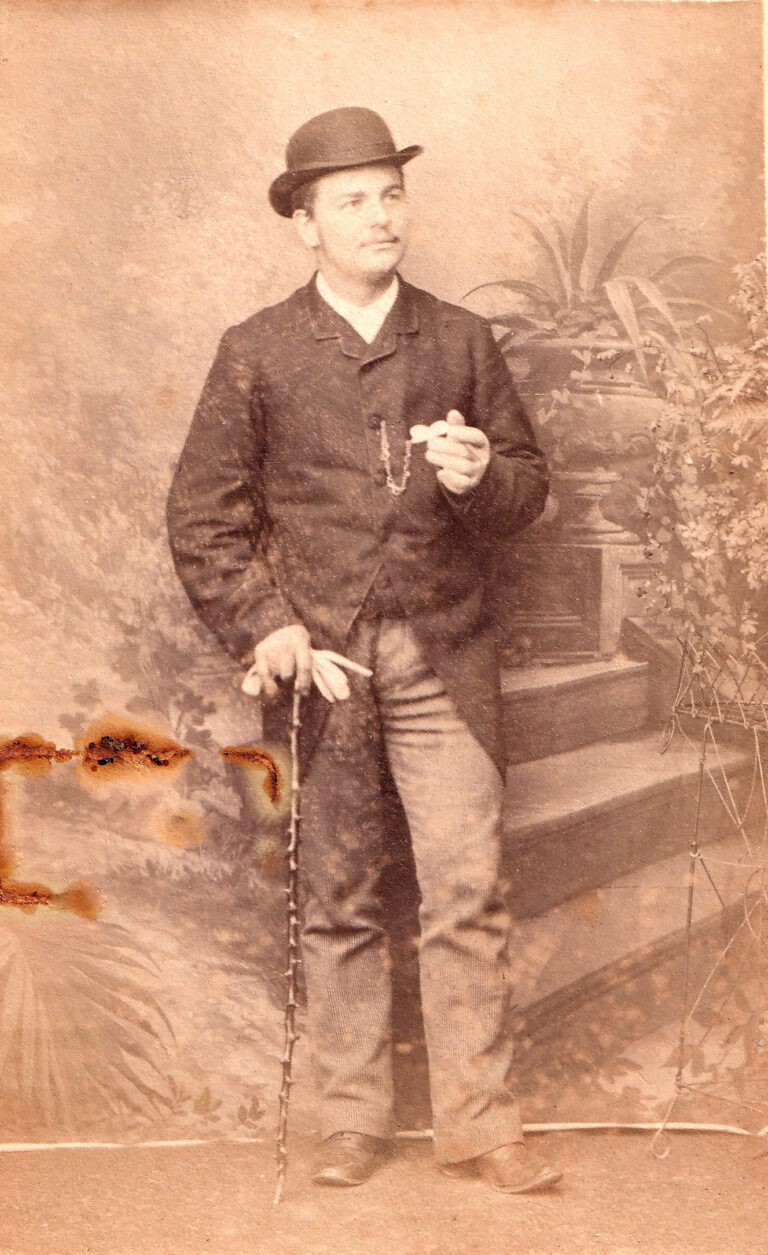
Photograph of a young Reinhold in his mid-twenties in the 1880s. Taken by the Vienna Photographic Company, whilst on a family holiday at the Irish seaside resort at Warrenpoint. Reinhold Thiele Family Archive.
It would seem likely, although few records survive, that the family would take trips to visit Lily’s siblings in India. Their daughter Dora would later stay with her maternal uncle and his family, Major Charles Stuart Rowbothom, in India from 1912 to 1919.
Active in the Arts
With a young family on the way, Reinhold remained active in the arts and photography community. The earliest references of this come from news coverage on an essay of his on “The Moral utility of Aestheticism” that he read aloud to the Fillebrook Mutual Improvement Association on Wednesday 4th February 1885.
“On Wednesday, Mr. Reinhold Thiele read an essay entitled “The Moral utility of Aestheticism,” in which he maintained that a pure sense for the beautiful has most assuredly the happiest influence on moral life, that anything that destroys the resistance of inclinations against the good promotes morality, and that the tendency of some of our powers to rule the will directly, and without regard to higher laws, lies in abeyance with our moral aim and its highest adversary which man has to conquer.
He said crude minds deficient of moral or aesthetic culture receive their laws from passion and only act in accordance with their desires. Moral minds deficient of aesthetic culture receive their laws from reason, and it is only the regard for duty that makes them conquer temptation.
With aesthetically cultivated minds we find another factor, which often replaces virtue where it is deficient or facilitates it where it exists. This factor is ‘good taste’.”
Leytonstone Express and Independent – Saturday 7 February 1885. The British Library Board. All rights reserved.
This essay acts as an excellent window into the mind of a 29-year-old Reinhold, where he talks take inspiration from the Aestheticism art-movement, and how he believes that art and beauty could be used to improve on the moral character of an individual.
In his time as Chief Operator at the LSC’s Regent Street Studio, Reinhold would steer the studio, leaning heavily into the “amateur photographer” market, opening specially reserved darkroom and studio space specially for free lessons and amateur photography.
At some point in the next few years, Reinhold is known to have left the Regent Street Studio and moved across to the Cheapside Studio. Whilst this move had been attributed to him surrendering his senior position at Regent Street to become a watercolourist at Cheapside, the true reason may reside in the surprise resignation of Ladislas Nievsky.
In 1890, Nievsky would leave the Cheapside Studio to take up a new role as director and technical advisor to the Automatic Photographic Company Ltd. This was one of the first ever photobooth companies, and was incorporated to great fanfare, boasting dignitaries on its board and an enormous £100,000 in raised capital. Although he would later deny allegations of fraud before its collapse 1891, the company was paying 50% of all sales to Nievsky in return for him being their sole supplier of ferrous plates; whilst enticing investors in with promises of an astonishing 30% return on their investments.
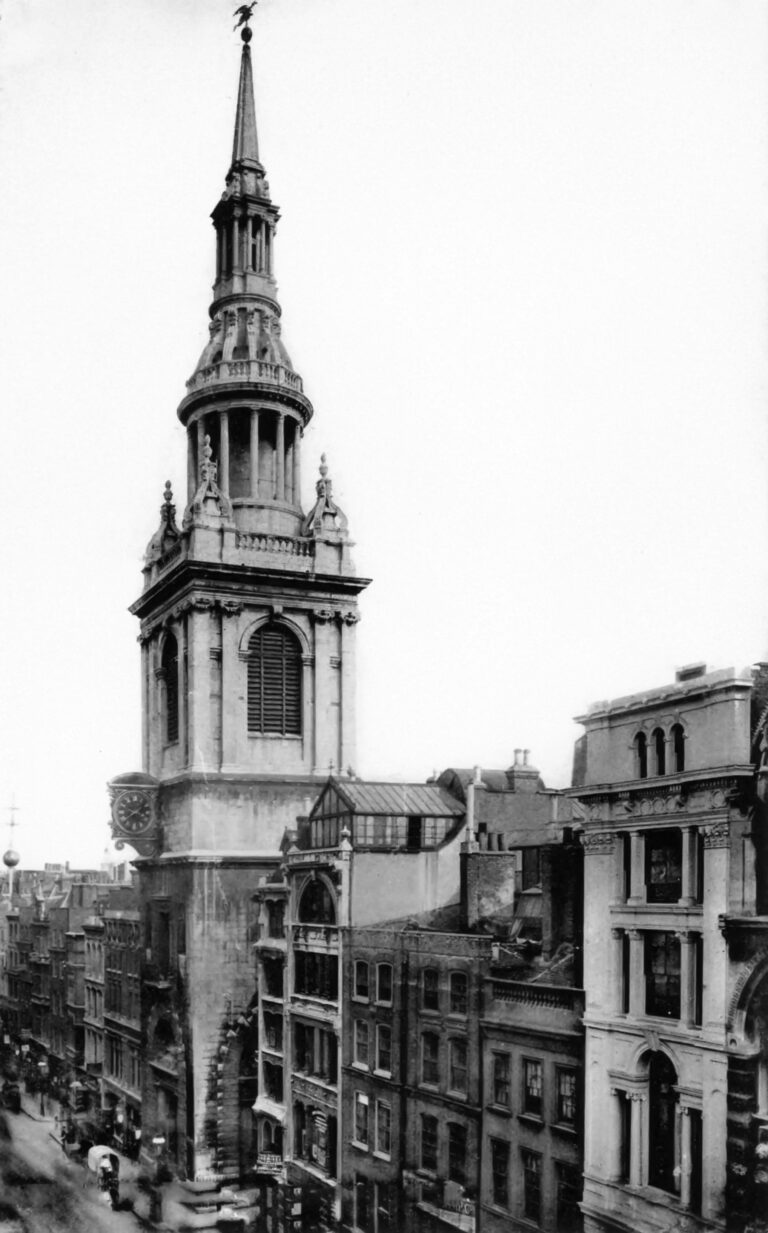
Photograph of the London Stereoscopic Company’s 54 Cheapside Studio, which Reinhold would move to in the aftermath of Nievsky leaving in 1890. The glass-photographic studio and attached darkroom is visible on the roof. Reinhold Thiele Family Archive.
A sporting article from later that year has Reinhold working in the Cheapside Studio as a portrait photographer as heavyweight boxer Frank “Paddy” Slavin (1862-1929) and sporting journalist William Swillington Shifter visit the studio.
“One of the curses of the day is photography. My parents did me a bad enough turn in borning me – a worse in borning me ugly, and I don’t want to reduplicate the grievance by being portraited. There have been Comet Years, Earthquake Years, Jubilee Years, and for me, at any rate, this is a Photographic Year.
A certain truculent brigand of the name of Thiele, of the London Stereoscopic is ever on my trail, transferring my unattractive lineaments to bits of glass.
On Monday I was hauled off to Cheapside, this being still on the way to Newmarket, and made to climb about a million stairs.
At first, it looked as if we were going over the roofs to have a dig in at Sir John Bennett’s watches, which would have been sensible.
Next, that we were all to pitch base over apex into the traffic, which would have been uncomfortable; then Thiele produced the Parra-matts Merchant, all smiles after his aquatic triumphs, and one Craig, who has been making absolutely phenomenal scores at volunteer ranges and who is associated with Thiele in his dastardly calling; and then I tumbled to the fact that we were most infallibly going to be “shot” (this jest will be let out for me at juvenile parties on the three years’ system with a penny on the bottle.)
We are still, by the way, getting to Newmarket, but gradually, very gradually – no indecent haste of undignified hurry.
Our sweet little Australian pal and I were then grouped, and a most horrible free fight took place on the subject of what the result was to be called. “Mind and Matter,” I suggested; but I heard Thiele say, “no-matter; never mind.”
William Swillington Shifter. Sporting Times – Saturday 11th October 1890. The British Library Board. All rights reserved.
It is whilst at the LSC that Reinhold would experiment with doing some of his earliest sporting photography whilst outside of the studio. The earliest reference to this being the newspaper Sports Life. It described how Reinhold covered the 1889 World Sculling Championship on the River Thames, possibly the same “aquatic triumphs” referenced in the above Sporting Life interview.
Throughout his career, Reinhold would specialise in industrial photography, photographing factories, dockyards, and munitions manufacturing. This interest and passion for industrial photography would first appear during his time at the LSC, when pictures of busy dockyards and factories start appearing in their catalogues. Until now, with outdoors photography, the LSC had focused on capturing street scenes and monuments, not industry. This change seems almost certainly linked to Reinhold, with their images of the London Dockyards and Ivory House almost certainly being taken by him. The style both matches his later industrial work of the 1900s, and once he left the LSC in 1894, their industrial photography would stop.
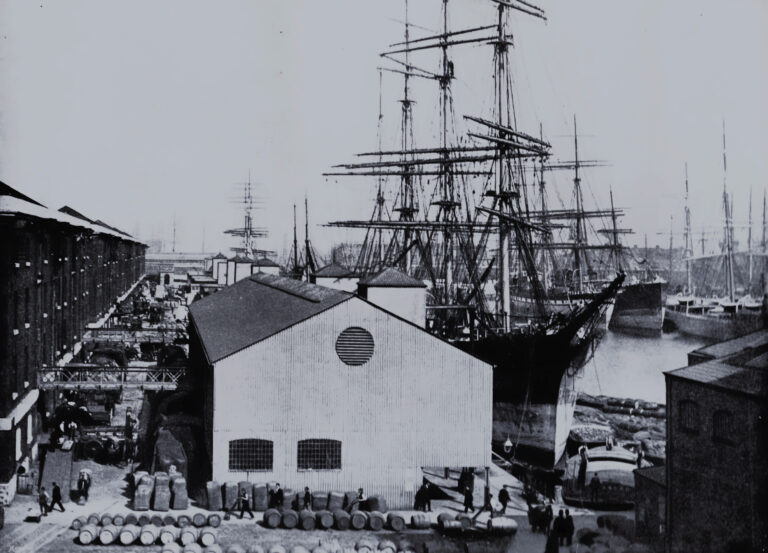
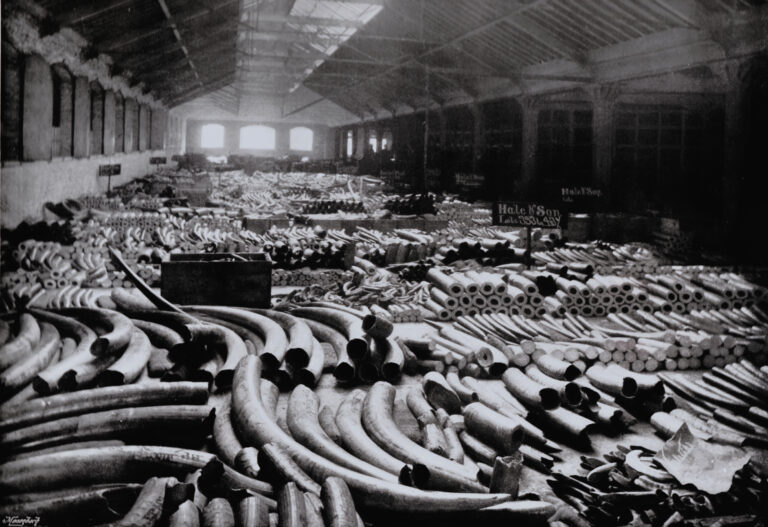
London Dockyards (left) and Ivory House, St. Katherine’s Dockyard (right). Both licenced by the London Stereoscopic Company circ. 1890-95. Stylistic similarities make is likely that they were taken by Reinhold during his employ at the LSC. Reinhold Thiele Family Archive.
The Leytonstone Camera Club
A major turning point in Reinhold’s life, was his involvement in the Leytonstone Camera Club, giving him both connections and set the scene for his future success.
The club first started as a group of friends in 1891, calling it “our camera club”, before getting themselves a base at the local Assembly Rooms (previously the Old National School) and formally setting themselves up as the Leytonstone Camera Club.
Although little remembered today, the club was significant within its unfortunately short lifespan (1891-1898), with membership both ballooning up to 136 by 1893 and including some of the most significant names of its time. One of its most celebrated members was the club’s vice-president, Alfred Horsley Hinton (1863-1908), famed landscape photographer and member of The Linked Ring. But others include the prominent Indian photographer, Shapoor N Bhedwar (1858-1915) and the early movie producer George Howard Cricks (1861-1936).
News coverage of club meetings shows Reinhold as a passionate and active member, showing his passion for educating on the subject, and his belief in photography as a form of art, embodying the club’s motto of “Qui capit facit”, or in English, “he who takes, makes”.
“For almost an hour on Wednesday evening Mr. R. Thiele of the London Stereoscopic Company, lectured to his fellow-members of the Leytonstone Camera Club on “Re-touching: Its uses and it’s dangers.” Mr. Thiele urged upon amateurs to never re-touch beyond the necessary limits.
Beyond them, to re-touch was simply to pander to the vanity of their sitters. As amateurs worked for art’s sake, not for £ s. d., they should be above the temptation indicated.”
Chelmsford Chronicle – Friday 27 November 1891. The British Library Board. All rights reserved.
As an early member of the club committee, Reinhold was involved in the planning of their first annual exhibition in 1892, a three-day event running from the tenth to the twelfth of November at the Leytonstone Masonic Lodge, complete with music, drinks, music, and live demonstrations.
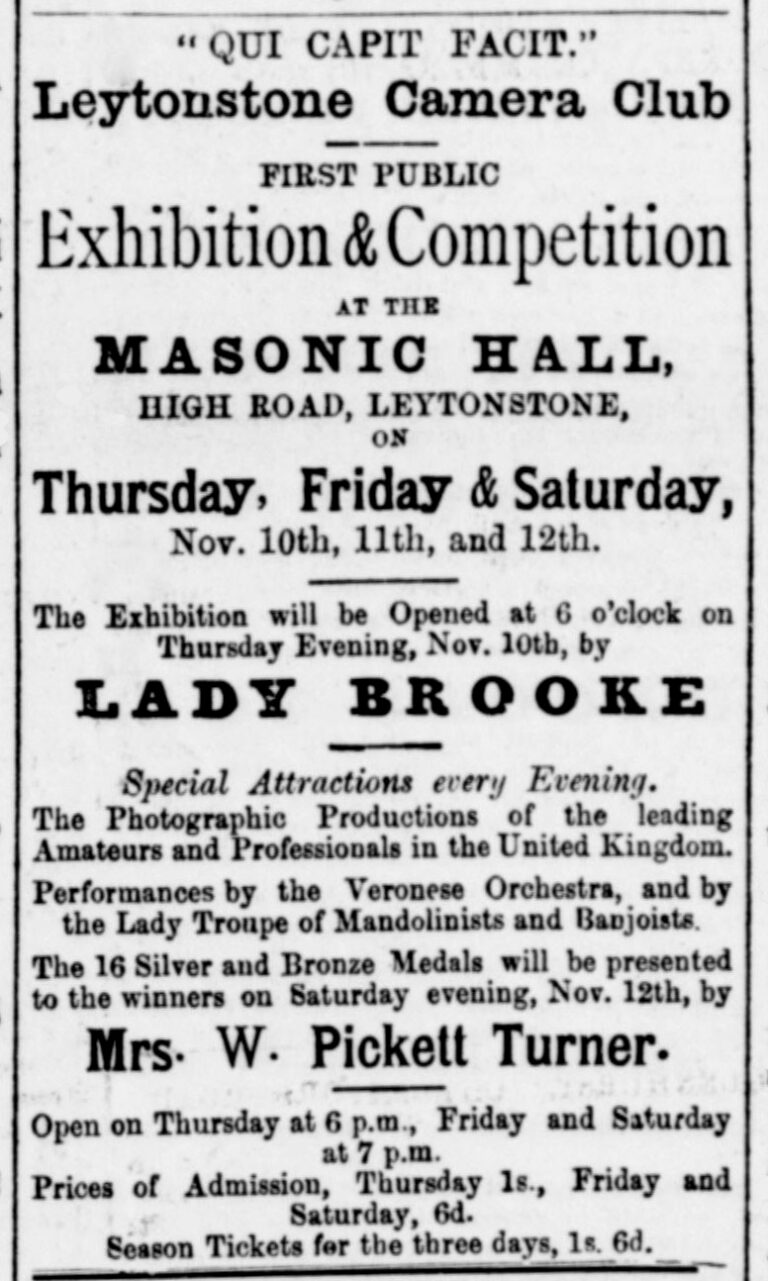
Advertisement for The Leytonstone Camera Club’s first public exhibition. The Woodford Times – Friday 4 November 1892. The British Library Board. All rights reserved.
The exhibition was officially opened to much press excitement, by Francis Greville, the future Earl of Warwick, and his wife Daisy Maynard, a keen amateur photographer, socialite, and philanthropist, but perhaps best known as a mistress of King Edward VII.
This wouldn’t be the last time Reinhold would meet the Earl, both would later attending the first druidic ceremony held by the Ancient Order of Druids at Stonehenge, in 1905, an event Reinhold would capture on camera. Despite growing up in a Lutheran household and possibly converting to Catholicism, Reinhold showed an interest in spirits and the occult to match Arthur Conan Doyle, who he would meet in 1900. Reinhold’s children would pass down stories of him performing séances in the family home at 18 Acton Lane, Harlesden. One story passed down to his granddaughter Ella Mai Rose (1921-1994), would recount how the table they were seated at started to levitate, before violently flying towards the door.
In any case, the event was a success, with the club awarding gold, silver and bronze medals for submissions. The club would continue to hold these annual exhibitions until either 1895 or 1897, and they would continue to grow and scale, with more medals being awarded each year.
It was during his time at the club that Reinhold would get his first book credits, as the illustrator for his fellow camera club member Robert Overton (1859-1924), a prolific author of children’s books. Reinhold would go on to illustrate two of Overton’s books, those being “Lights Out” and “After School”. These 1893 and 1895 publications are some of Reinhold’s earliest surviving illustrations and were completed in watercolours and individually monogramed “RT”.
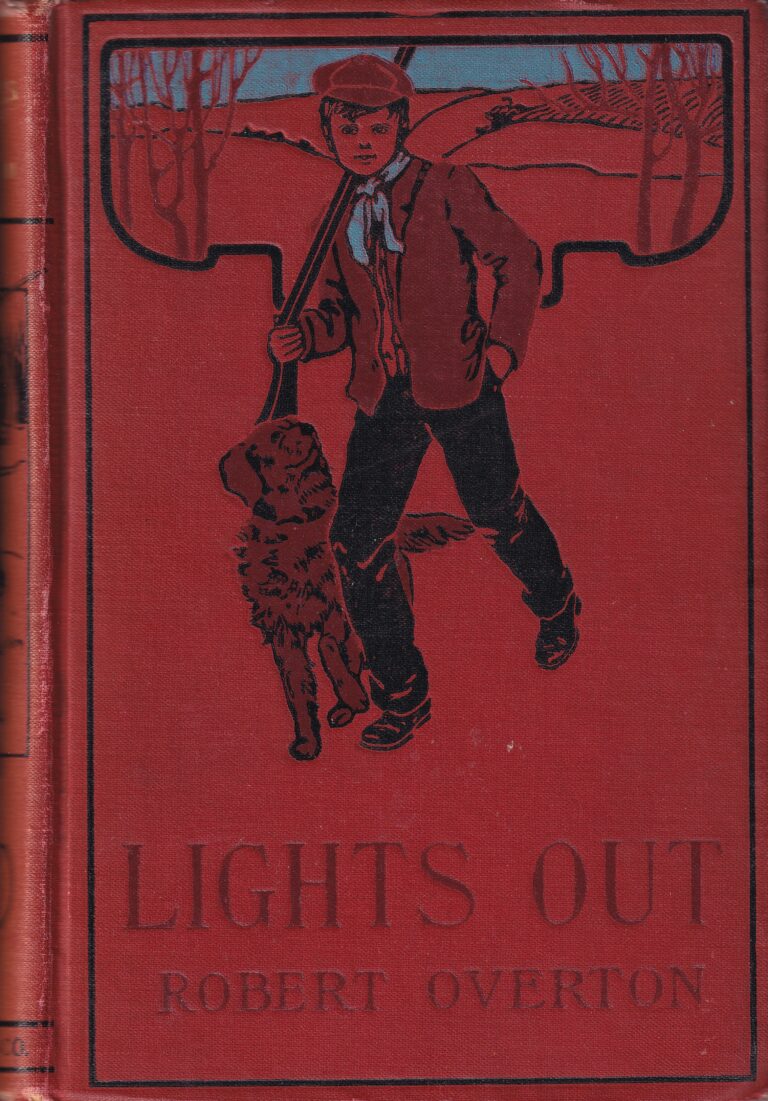
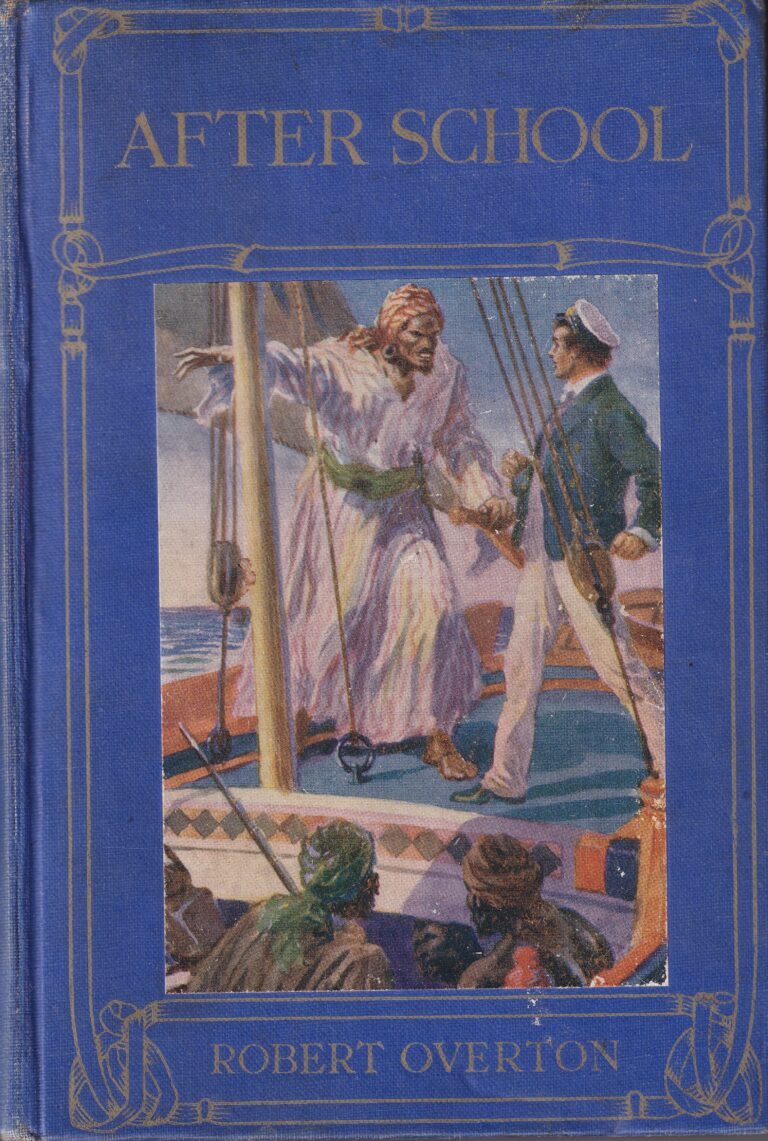
Robert Overton’s “Lights out” (1893) and “After School” (1895). Both were hand illustrated by Reinhold as a favour to his friend and fellow club member. Reinhold Thiele Family Archive.
They feel quite different in style from later surviving examples of his work, including the watercolour currently held in the National Archives at Kew of the future King George V and his family. A bookplate he designed in 1901 for the Ex Libris-Society would again be quite different in style and was done in the German tradition of woodblock printing, showing his range of skills.
It must be said that out of all the connections he made through the club, the most consequential for his career would be a man best known as the ‘Dickens Engraver’, Thomas Symmons, his future business partner.