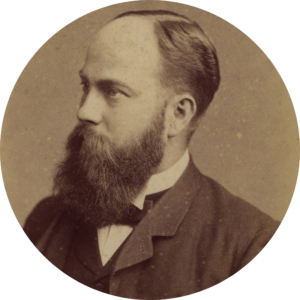
Emigration: From America to Britain, to Hamburg & Back
In the summer of 1873, aged just sixteen, Reinhold renounced his German citizenship and prepared to follow the flood of people emigrating to the United States of America to escape the beginnings of an economic slowdown that’s now known as the Long Depression.
According to Thiele family papers, the true reason for Reinhold’s emigration was on his father’s orders, to avoid the newly formed German Empire’s compulsory military service. At sixteen this would have been as little as a year away, likely being drafted into the III Army Inspectorate, where he would’ve served for a minimum of three years.
The choice of the US may have come from a place close to home. Whilst working in Wunder’s studio Reinhold would have worked alongside and gotten to know his three sons. One of these was the youngest son, Herman Wunder (born Georg Friedrich Hermann Wunder), who was only a year or two older than Reinhold, and had himself, only emigrated to the US a year prior.
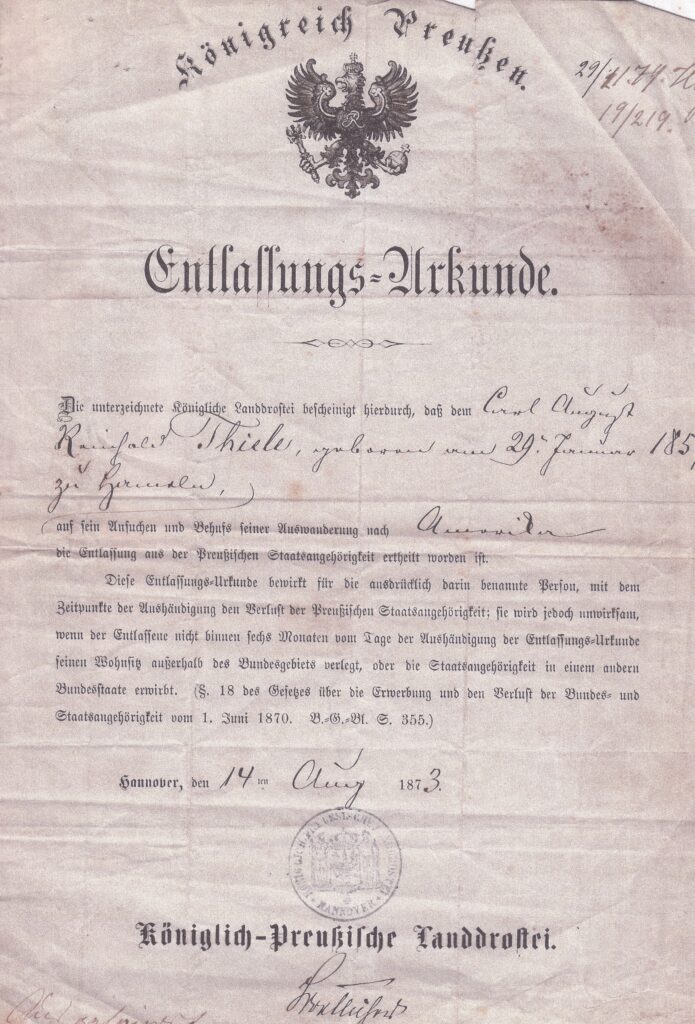
A “Certificate of Expatriation” issued by the Prussian State to Reinhold on the 14th August 1873. It released him from Prussian Citizenship and the need to serve in the army, on the understanding he left the German Federation within six-months. Reinhold Thiele Family Archive.
Whilst no records survive of Reinhold’s journey to the US, we can get a flavour of it by following Herman’s journey from the year prior. Likely travelling out from the City of Hanover, he would have travelled west to Wunstorf; there boarding a steam train on the Bremen–Hanover Line, travelling north to Bremen and then its seaport at Bremerhaven. It was here that Reinhold would’ve boarded a steamship, as Herman had on the SS Main, taking the day’s travel to Southampton Port on the south coast of England, before a further seven to ten days travel to New York, where he would have been processed at Castle Garden.
Little is known of Reinhold’s time in the US other than it was not a success. Memories preserved in the Thiele family papers say that he was unable to find work as a photographer and worked any job he could find, including at one point in a bakery, a gruelling and hazardous profession, with horrifically long, hot hours and constant exposure to dangerous chemicals. His children would later recall that he lived in extreme poverty during this time and came close to starving several times.
He was to stay in New York for almost two years before his family could raise funds to help him to return to Germany in 1875. When his younger brother Georg G Clamor Thiele (b.1861) later came of age, rather than also sending him to the US, it seems their father chose to send him to England. Although, unlike Reinhold, Clamor would permanently return to Germany, setting up a photography studio in the family garden in Hameln.
Where Reinhold’s adventure to the US ended in disappointment, it would not be the same for Herman. With the probable financial backing of his wealthy family, he was to open the “Herman Wunder Photographic Art Studio”, later expanding to two locations, at 1239 Bedford Ave & 722 Fulton, Brooklyn, New York. He would run the studios into the late-1890s before closing them and later starting a family-owned cigar manufacturing company, before fading into obscurity in the 1920s.
Returning to Europe & W H Prestwich
On Reinhold’s return to Hameln in 1875, he seemingly disappears from the record for three years before reappearing in England in 1878, when he moves to London for work in the employ of William Henry Prestwich (1831-1912), working in his 155 City Road Studio. When he would supply a history of his residences to the UK government under the Aliens Act of 1914, he would claim he had resided in the country since 1875, however, this seems unlikely.
His first recorded employment in the United Kingdom dates to 1878, and in his personal photograph album, the earliest UK-based carte de visites date to 1877. What seems most likely is that upon returning from the United States, he initially stayed in Germany, working for his father before perhaps moving to the United Kingdom in 1877 or 1878.
Struck by the effects of the Long Depression, and Hannover no longer being the centre of an independent state, Reinhold’s father’s business seems to have suffered. With this economic slowdown and high-end milliner goods no longer in such high demand, Heinrich would diversify his business during the 1870s. He started running a market stall (3 Markt. Street, Hameln) selling wallpaper and furniture, and Reinhold seems likely to have assisted in the advertising of this venture.
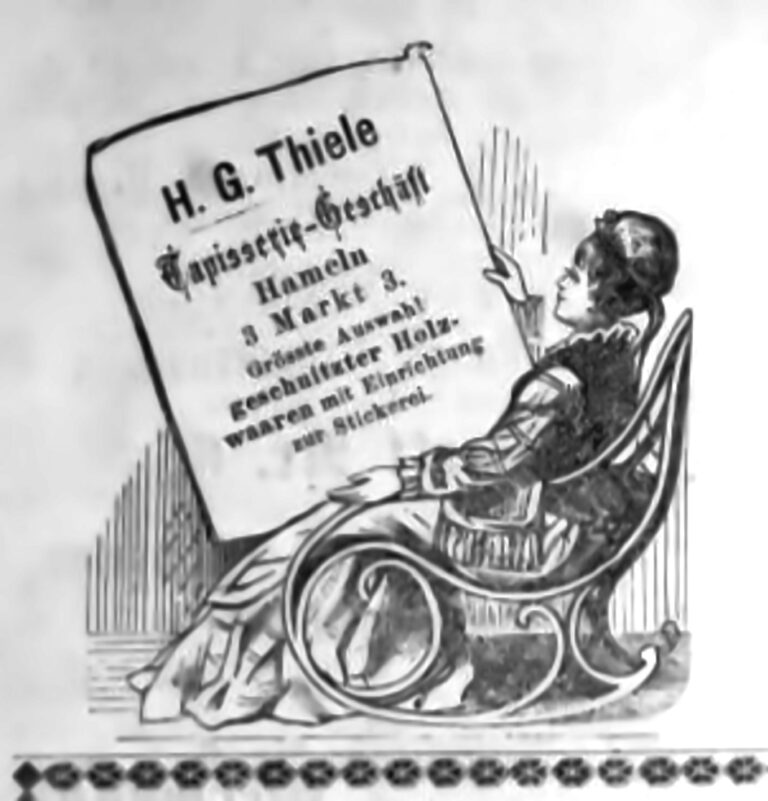
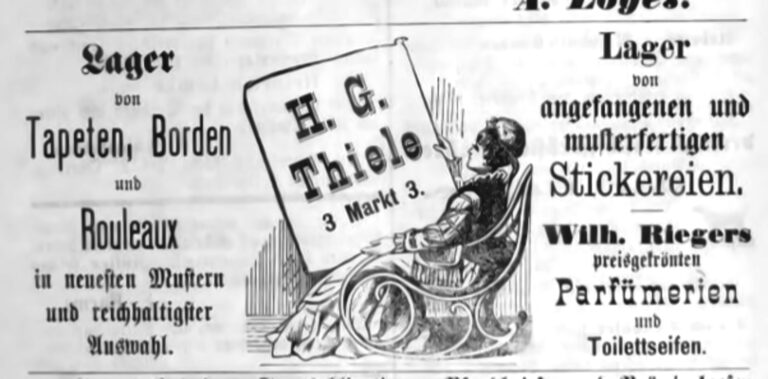
Engravings likely produced by Reinhold in support of his father Heinrich’s business in 1876. “Hamelnsche Anzeigen” – Digitalised by Museum Hameln – All rights reserved.
Heinrich advertised his services in the local newspaper “Hamelnsche Anzeigen”, his advertisements standing out for how richly illustrated they were. Whereas all other advertisements solely used text, Heinrich’s business started using a woodcut engraving of a lady reclining on a classic Thonet bentwood rocking chair. With the illustration only appearing after Reinhold’s return to home, this may be the earliest known surviving example of his work.
William Henry Prestwich was a professional photographer who was, alongside his better-known son, John Alfred Prestwich, an early pioneer of cinematography. In 1870, Prestwich had sold his old studio and business in Reading with all his negatives to Sydney Victor White (1840-1913), before reestablishing himself in London in about 1877.
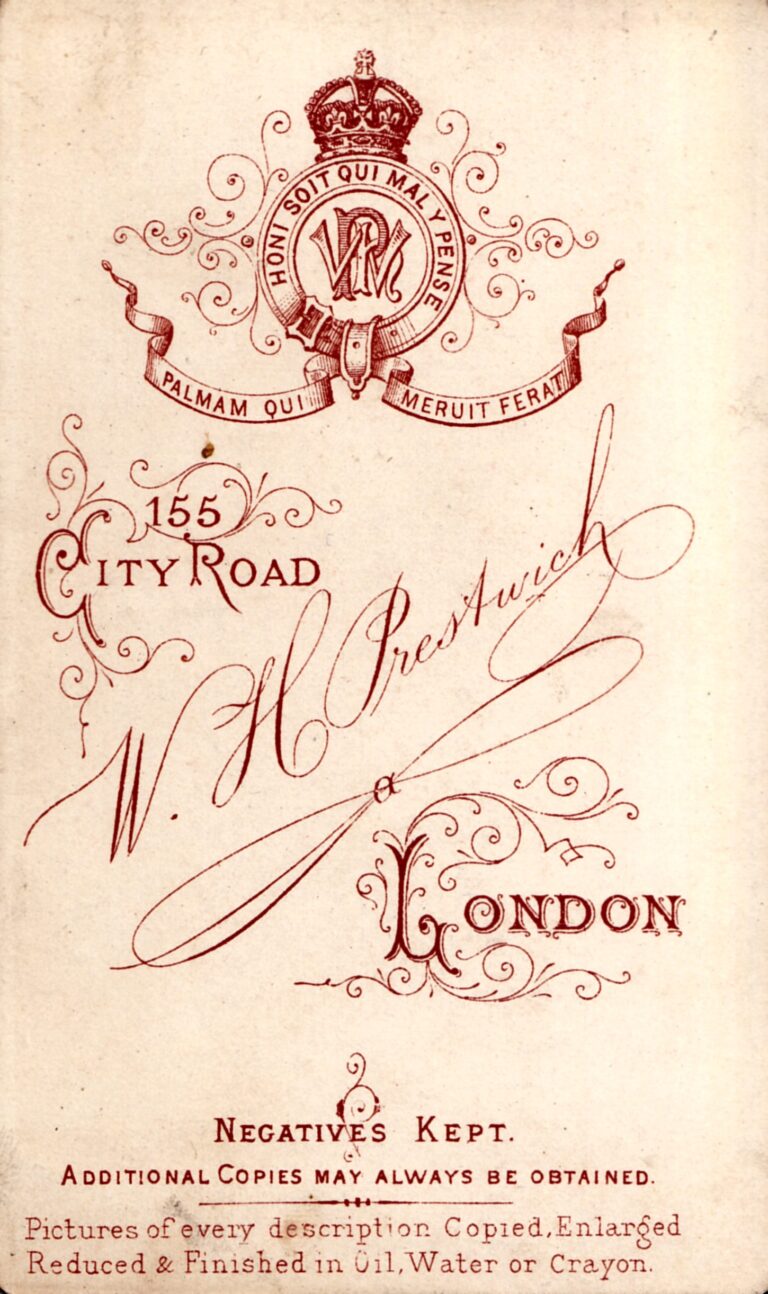
Carte de visite advertisement of William Henry Prestwich (1831-1912). Dating to about 1878, when Reinhold was active at the studio. Reinhold Thiele Family Archive
This reestablishment of his photographic studio would seemingly coincide with Reinhold moving to England to take up work at said studio, possibly suggesting that he may have been employed to assist in the initial setting up and running of the new studio.
Advertisements from the 1880s show the services that Prestwich offered including carte de visites, cabinet cards, and opalotype photography.
Heinrich Friedrich Plate of Hamburg
Either in 1878 or early 1879 Reinhold would leave England and return home to Hameln for unknown health reasons, before taking a job in Hamburg, under the tutelage of Heinrich Friedrich Plate (1824-1895). Plate, although largely forgotten in the pages of photographic history, was in his lifetime an award-winning lithographer and photographer.
Reinhold is the sole source on Plate’s early life, placing him as a member of the Academic Legion during the Vienna Uprising of 1848. In an 1899 interview, Reinhold would claim that Plate, then aged just 24, defended the barricades even as the Austrian army started its bombardment of the city. He held out, eventually fleeing with wounds that caused him to almost lose the complete use of both his hands.
In a similar vein to Wunder he would start out running a lithographic business, before expanding into daguerreotype from 1856 and later carte de visites. He would later exhibit alongside Wunder at Hamburg’s 1868 Photographic Exhibition.
Reinhold would’ve worked in the studio alongside Plate’s two sons and learning the craft alongside them (both sons would later emigrate and run studios of their own, one of which still trades today under the name of Plâté & Co).
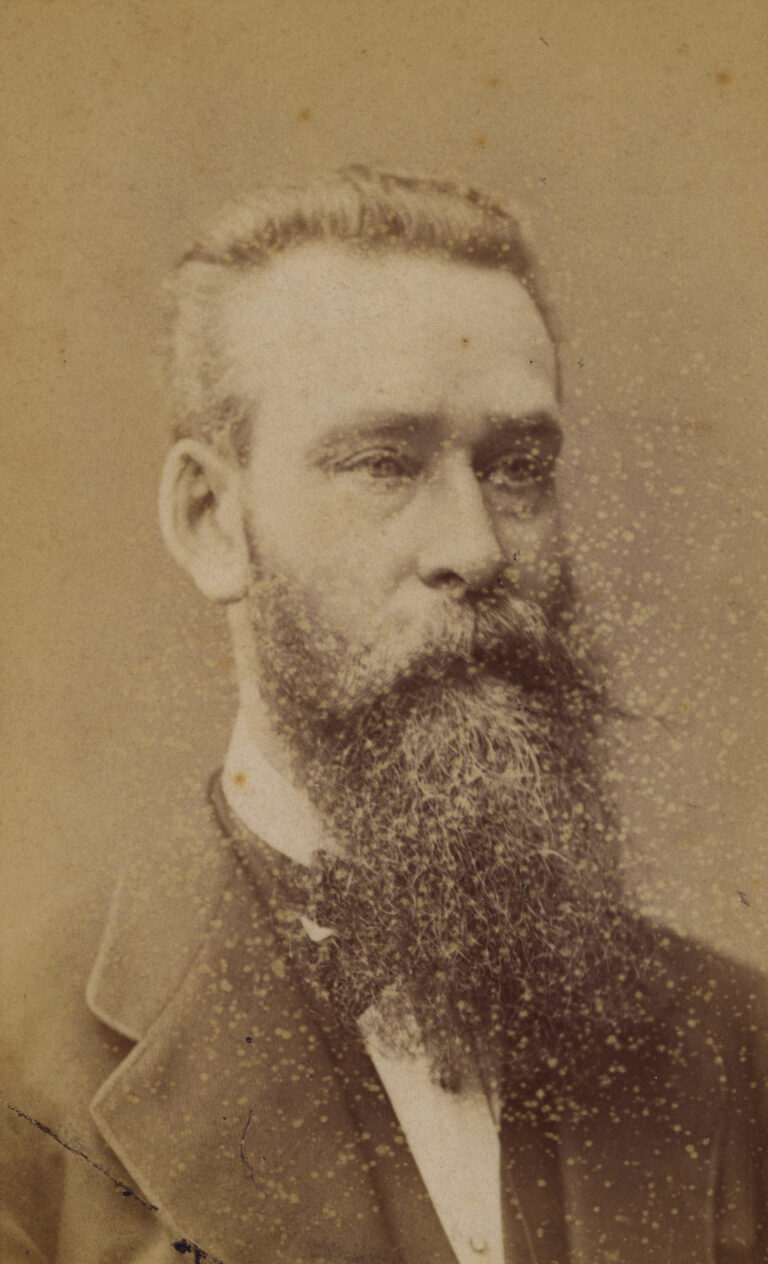
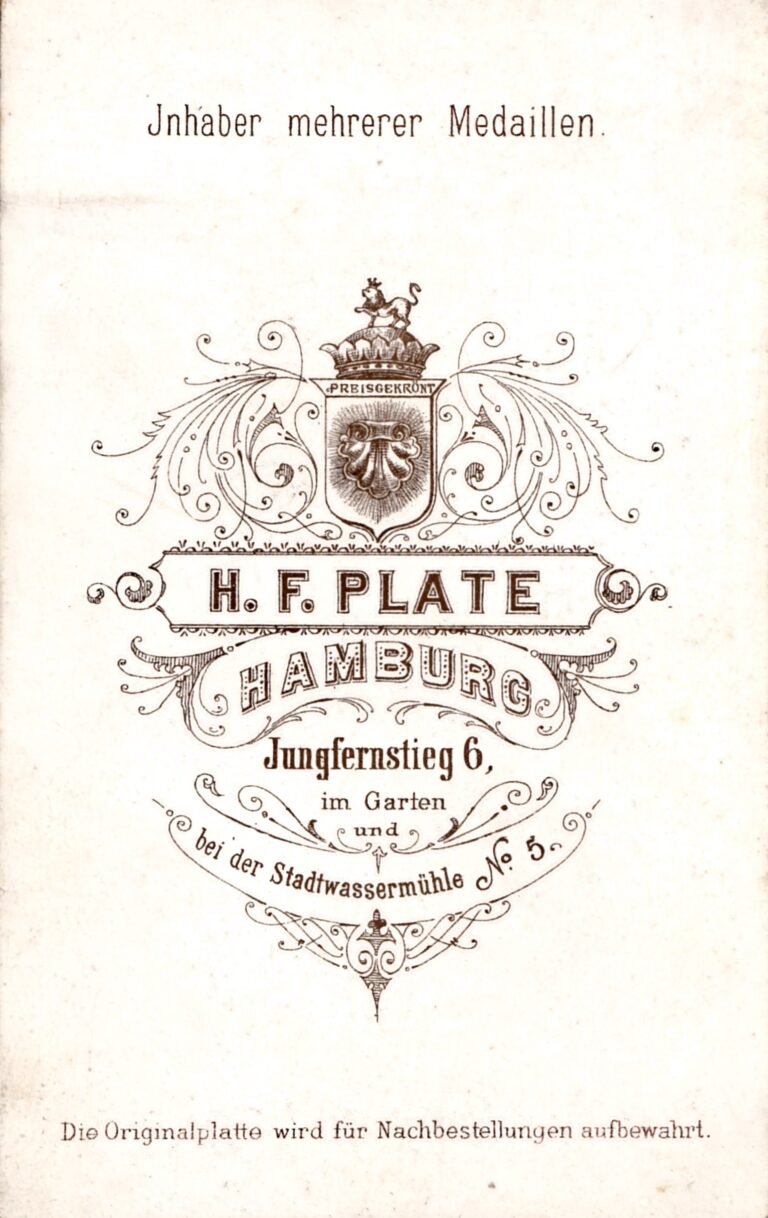
Photograph of Heinrich Friedrich Plate (1824-1895) and an advertisement for his Hamburg studio. Reinhold Thiele Family Archive
Plate seems to have held a special place in Reinhold’s heart, for he would keep a photograph of the man in his family album. This is one of only two images of Plate known to exist, the other sits in the catalogue of Librairie Trois Plumes, a French book selling company. Their copy is autographed with a handwritten dedication to the lithographer and photographer, Gottlieb Benjamin Reiffenstein (1822-1885).
What we do know about Reinhold’s time in Hamburg is more to do with his preferred leisure activities. In 1890, a decade on from his stay in Hamburg, someone who knew Reinhold recall how he.
“Endeared to us all by memories of Emma’s Casino Tanze Tingel Tangel at Hamburg”.
Although a term now not familiar to most people, “tingel-tangel” was a slang term used for the cheap music halls of the day. Whilst we don’t know where ‘Emma’s Casino’ was, it’s likely that this is how a young Reinhold in his early twenties enjoyed his leisure time, enjoying the bustling Hamburg nightlife of music halls and gaming houses.
His love for theatre and music halls would stay with him for life; for those doing research into theatre and movie stars of the 1890s and early-1900s, Reinhold’s portraits of early actors and actresses are an important resource, with his works often being the only surviving photographs of them.
Reinhold’s time at Plate’s studio would prove to be brief but important. Plate’s specialism in stereographs would lead perfectly into Reinhold’s next job back in London at the famed London Stereoscopic & Photographic Company.