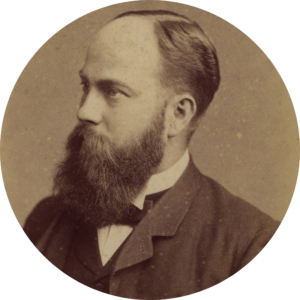
The Pioneer & Father of Modern Photojournalism
Reinhold has variously been described as the “father of modern photojournalism” for his pioneering of the field, however, it is a title he shares with the later and better-known French photographer, Henri Cartier-Bresson (1908-2004).
By the time Reinhold came to the scene, photojournalism had already been established to some degree, with figures such as the American photographer, Mathew B. Brady (1822-1896) being called the original ‘father of photojournalism’ for his battlefield photography during the American Civil War.
What makes Reinhold different from his predecessors, whilst predating Henri by decades, is how he actively advertised himself as a ‘press photographer’ and ran his studio as such, one of the first people to do so.
This was one of, if not the first dedicated press photography studio in history. Brady’s foray into photojournalism did not extend beyond the American Civil War, and for other figures like Roger Fenton (1819-1869), who covered the Crimean War, it was a brief project, and he seemingly had a disdain for what he called ‘trade’ photography.
Reinhold opened his studio at a time when advances in halftone printing was allowing newspapers and periodicals to phase out time-intensive and costly engravers in favour of being able to directly add photographs into their publications. With his office just minutes from the old Fleet Street publishing houses, Reinhold capitalised on this technological leap which enabled him to make his vision of photojournalism a reality and commercial success.
Although his studio faced decline in the years from 1910, Reinhold would actively advertise himself as a press photographer for over a quarter of a century. His death in 1921 would predate Henri Cartier-Bresson first touching a camera by eight years, and his first piece of photojournalism by sixteen years.
The Partnership: Symmons & Thiele
In 1894, after fourteen years at the London Stereoscopic Company, Reinhold would leave and enter a business partnership with fellow friend from the club, Thomas Symmons (1848-1928) at 60 & 66 Chancery Lane. Symmons is a fascinating character who is oft forgotten in tellings of Reinhold’s life and has faded from history, and yet, played a crucial role in enabling Reinhold to become who the figure he became.
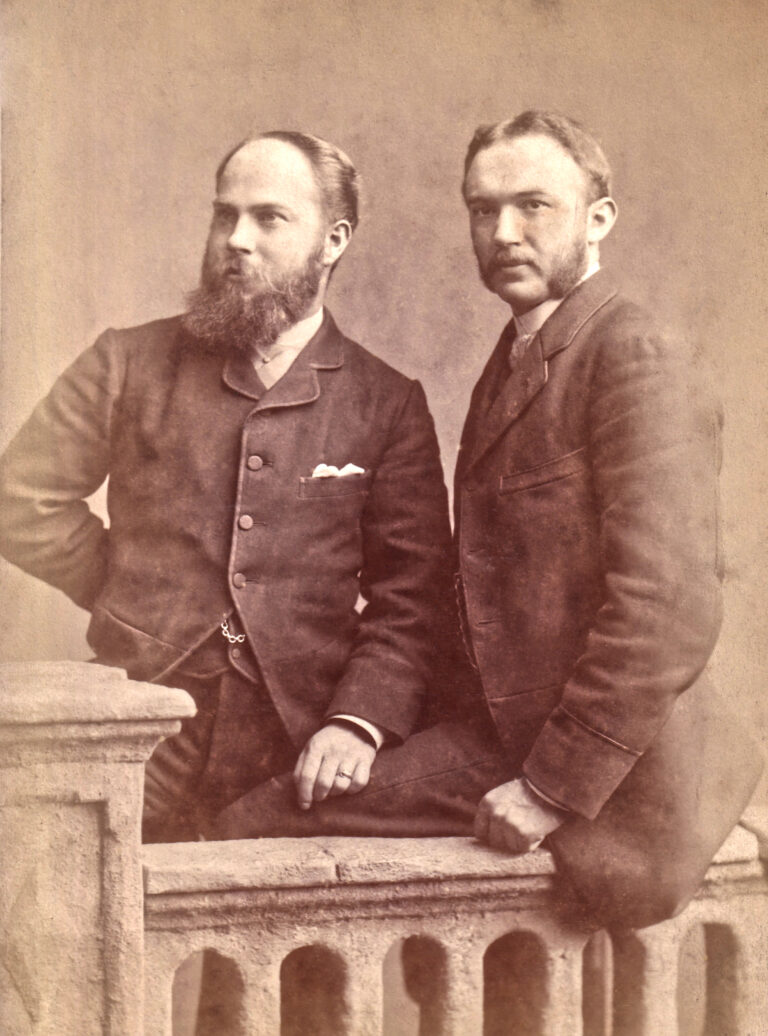
Portrait of the proprietors of “Symmons & Thiele” – Reinhold Thiele (1856-1921) on the left, and Thomas Symmons (1848-1928) on the right. Taken at the LSC in about 1894. Reinhold Thiele Family Archive.
Before photography became of viable commercial use for illustrating 19th century newspapers, periodicals and books, the primary method had been wood-engraving. Unlike Reinhold who had entered directly into photography, Symmons, who was eight years his senior, had been apprenticed as an end-grain woodblock engraver. From a later interview conducted for The West Australian (9 June 1928), we know that his earliest work was likely for The Young Ladies Journal. However, the work he is best known for and is referenced on his headstone in Australia, is his work engraving Fred Barnard’s (1846-1896) illustrations for the Household Editions of Charles Dicken’s works.
Symmons would come to photography late, with his first foray dating to the late-1880s and advertising the opening a small studio from his own home in 1887, whilst continuing to run his engraving business from 60 Chancery Lane.
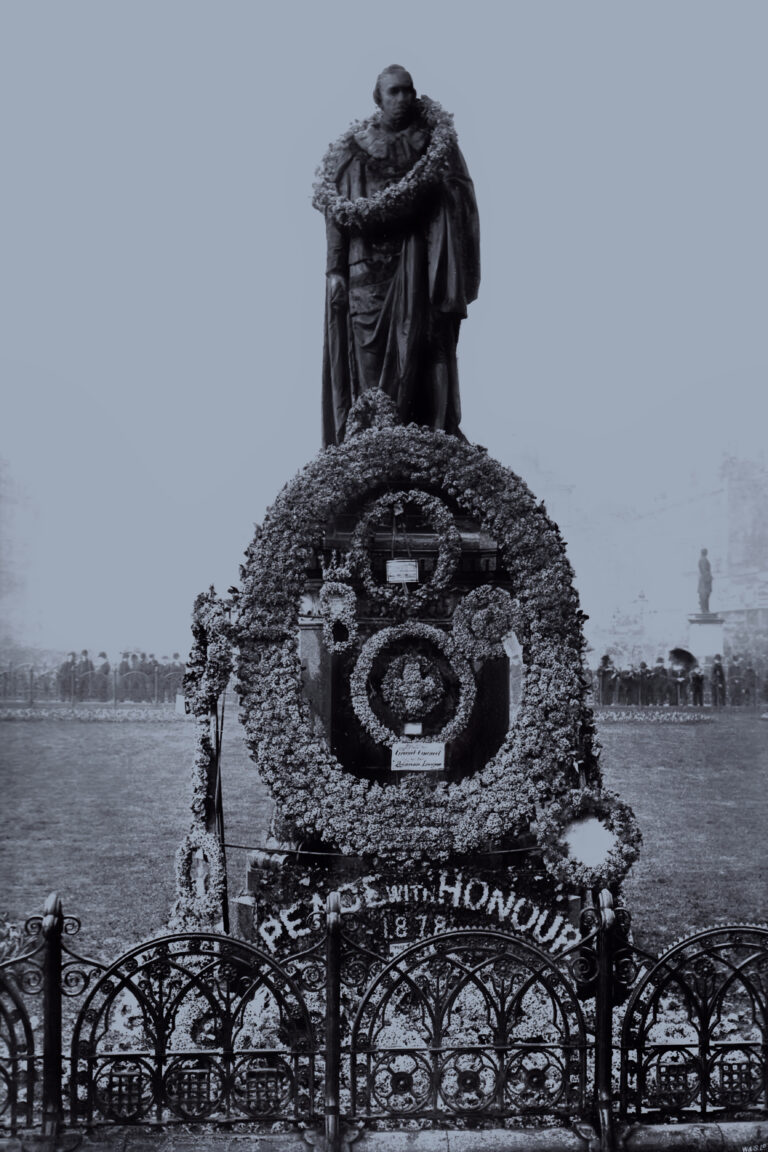
Primrose Day, laying flowers on the statue of Prime Minister Benjamin Disraeli. Symmons & Thiele – 1894-96. Reinhold Thiele Family Archive.
It would be reasonable to assume that Reinhold and Symmons met through the Leytonstone Camera Club, which Symmons was an active member of. It seems likely that they bonded over a shared love of theatre. News articles show Symmons to have been an active member of the music and theatre scene back to the 1870s, from creating scenic backdrops for performances to arranging performances by celebrities of the time, such as William Henry Pennington (1833-1923), an actor and survivor of the famous Charge of the Light Brigade.
The partnership between Reinhold and Symmons was one of genius. It combined Reinhold’s technical expertise in photography with Symmon’s 20+ years of industry connections and experience in supplying images and illustrations to the Fleet Street press and publishing houses. With their technical skills and connections, Symmons & Thiele would become one of if not the first photojournalism studios, chasing stories and taking photographs with the sole intention of selling and licencing them to the press.
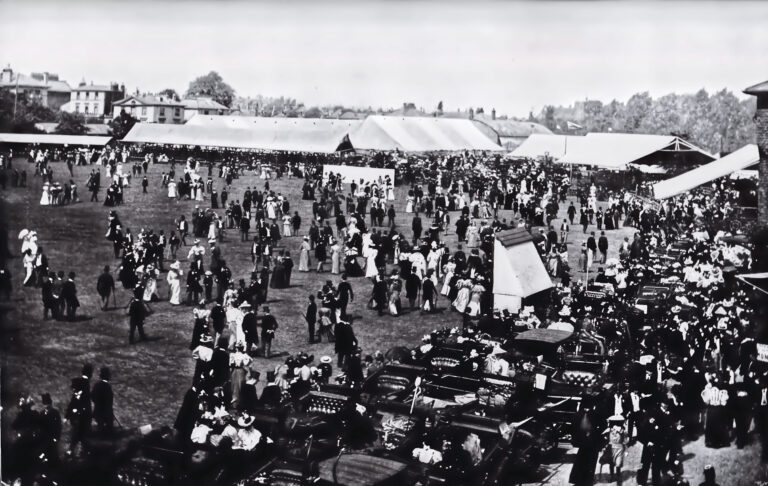
The 1895 Eton vs Harrow Cricket Match at Lord’s Cricket Ground, London. Symmons & Thiele. Reinhold Thiele Family Archive.
The pair seem to have timed the opening to their studio with the development of ‘relief halftone printing’ in the early to mid-1890s, which was quickly adopted by periodicals and journals. This worked by using dots of varying sizes and spacings to create a gradient that would allow publishers to take the photographs that Symmons & Thiele supplied to them and quickly and easily reproduce them in their publications.
Besides covering news stories, the partnership would specialise in sport photography for the press, in particular, football teams. Their approach to cornering the sports photography market was aggressive. With periodicals and newspapers now increasingly carrying images of sporting celebrities and teams, Reinhold and Symmons attempted to capitalise off this by photographing players and then licencing their images out for both use in the press and on commercial products.
Rather than just staying in the studio, Reinhold and Symmons travelled to cover sporting events, covering everything from football, cricket, and golf, to cycling, swimming, skating, and rowing. Taking photographs of teams, events and players. They would then licence these images out to primarily newspapers and magazines, but also tobacco companies.
A fantastic piece of research by Andrew Leitch in his article “Issue Dates of Pre-1900 Association Football Card Sets”, found that Symmons & Thiele were licencing their sporting photographs to tobacco companies, such as Ogden’s Cigarettes and Cohen Weenen & Co, for use in their marketing with cigarette cards.
Reinhold and Symmon’s work in the field of sports has had a major impact on our record of the sporting world from this time, leaving us some of the earliest photographs of sports teams, such as that of Arsenal, The Corinthians, and Port Vale FC.
Some of these names would include Robert Goslind (1868-1922), the 1895 National England Team Captain, Bob Howarth (1865-1938), an 1888 FA Cup Finalist and member of “The Invincibles”, and Joe Powell (1870-1896), who captained Arsenal in their first season of League football and was one of the first football related deaths.
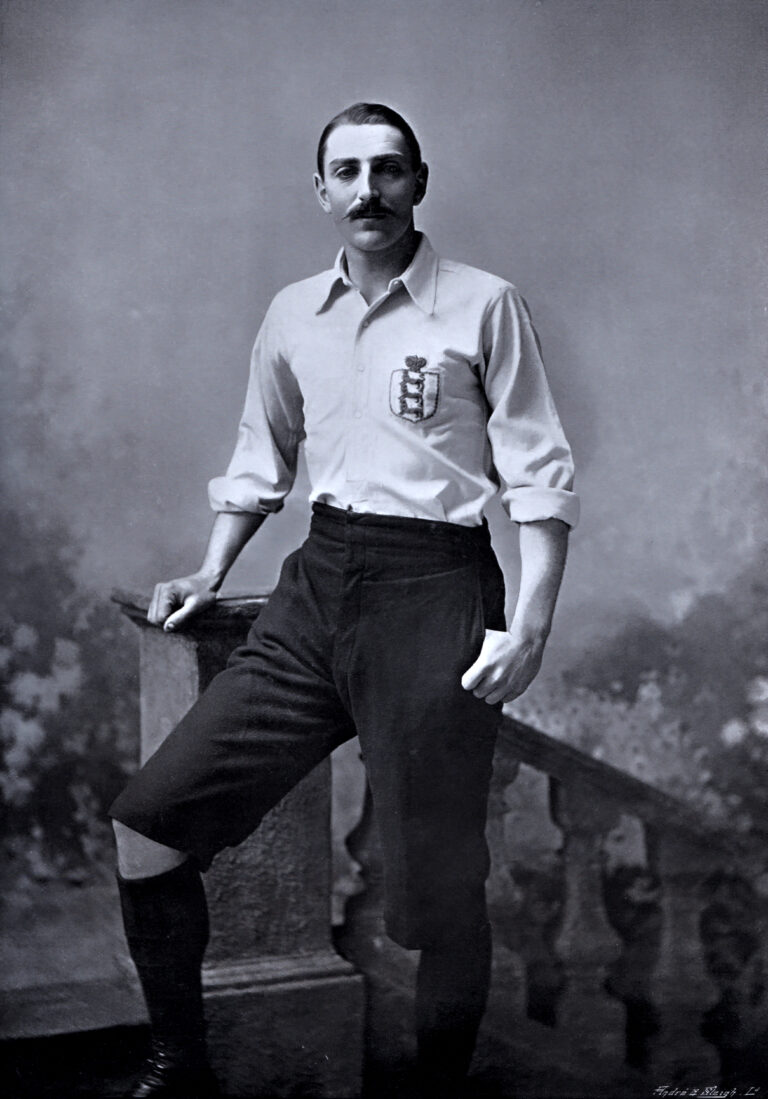
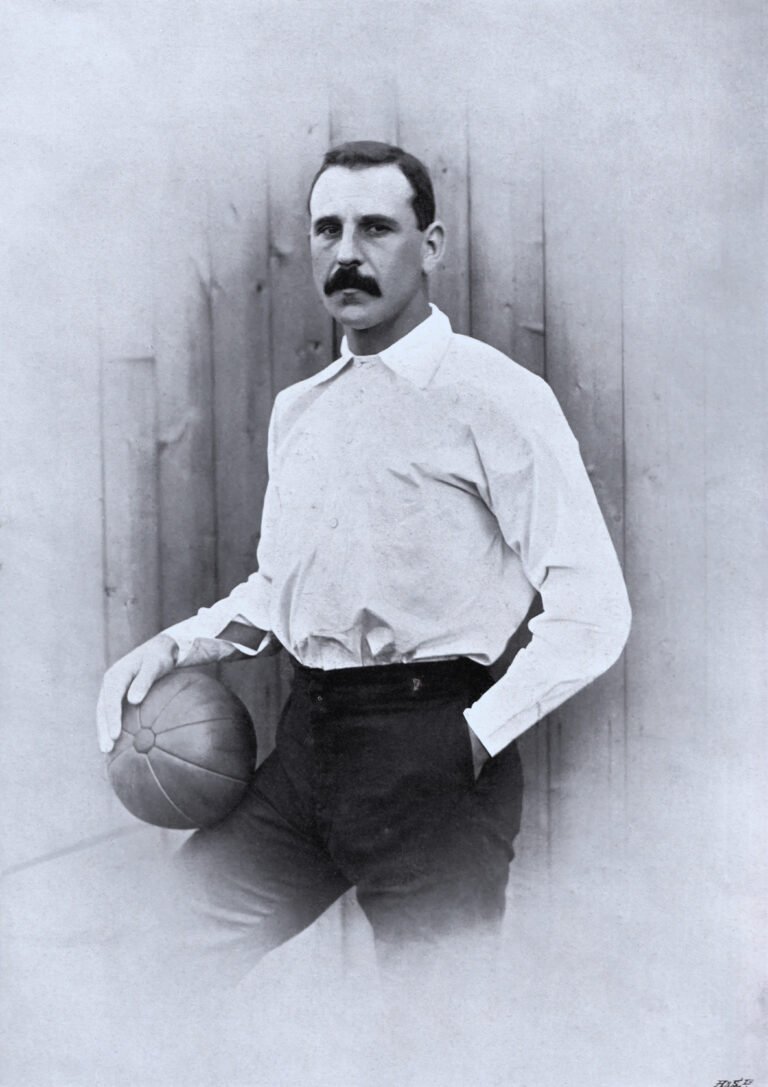
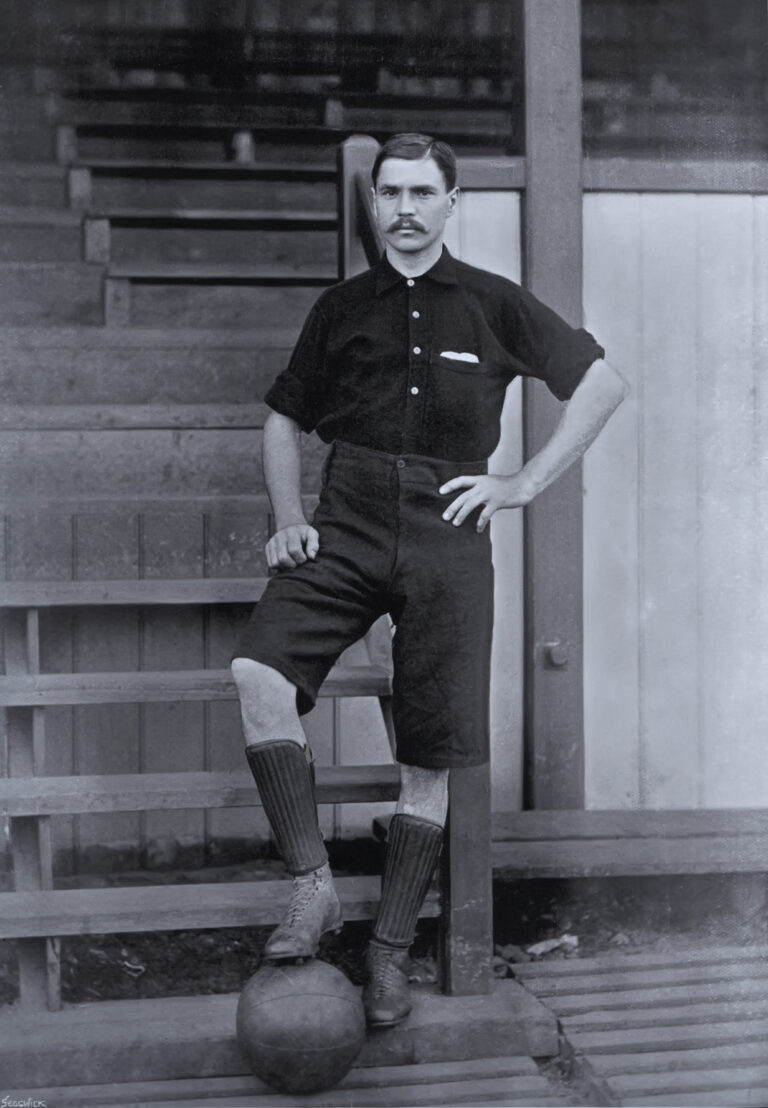
Sporting photographs by “Symmons & Thiele” dating to 1895, produced to be licenced out to publications and for merchandise. Robert Goslind (1868-1922) on the left, Bob Howarth (1865-1938) centre, and Joe Powell (1870-1896) right. Reinhold Thiele Family Archives.
Perhaps one of the partnerships’ most notable works is their early coverage of women’s football. The first recorded women’s football match happened in 1881, and it was in 1894 that the suffragist Nettie Honeyball was to found the British Ladies’ Football Club, the first female football association in the world.
Their first match was held on 23rd March 1895 with an attendance of over 12,000 people. Reinhold and Symmons photographed the team several times ahead of the big match during their training sessions, these photographs are the only known photographs of the full team lineups for this match, and are thus an incredibly important resource in the history of women’s football, and football generally
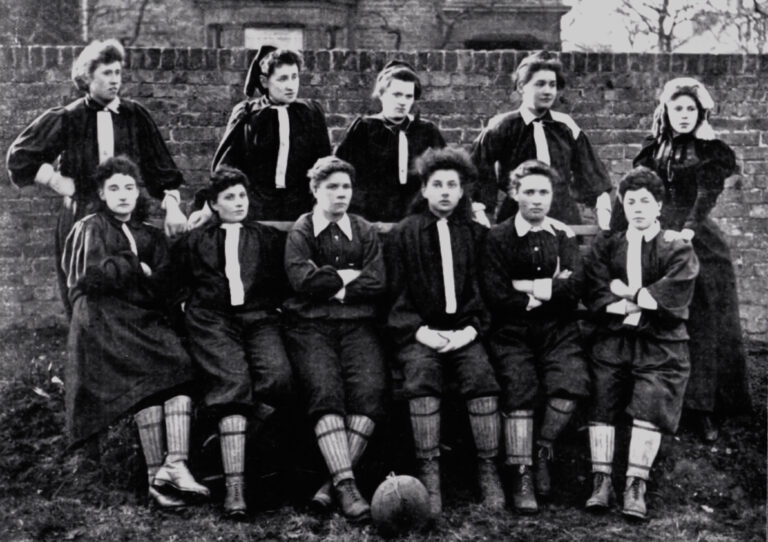
The British Ladies’ Football Club 1895 – North Team. Nettie Honeyball is second from left, back row. Silver Nitrate print. Reinhold Thiele Family Archive.
For all its success, the partnership between Reinhold and Symmons was short-lived, with them dissolving the business on 7th May 1896, with Reinhold continuing business from 66 Chancery Lane, and Symmons from 60 Chancery Lane.
With the dissolving of the partnership, Symmons would keep his Chancery Lane studio open for a few more years, before closing it in favour of returning to his old home studio at Hermon Villa, Woodford. In 1913, he would emigrate to Australia and later pass away in 1928, aged 80.
As a note of interest, his son, Wilfred Hubert Symmons (1882-1952), almost certainly spent time working in his father and Reinhold’s studios and would go on to be a career press photographer who was active throughout the first and second world wars.
Going Solo: Reinhold Thiele & Co
With the dissolving of the partnership in 1896, Reinhold would start his own firm which would trade for the next twenty-plus years. With the opening of his own business, he would also take all of the glass negatives with him from his partnership with Symmons.
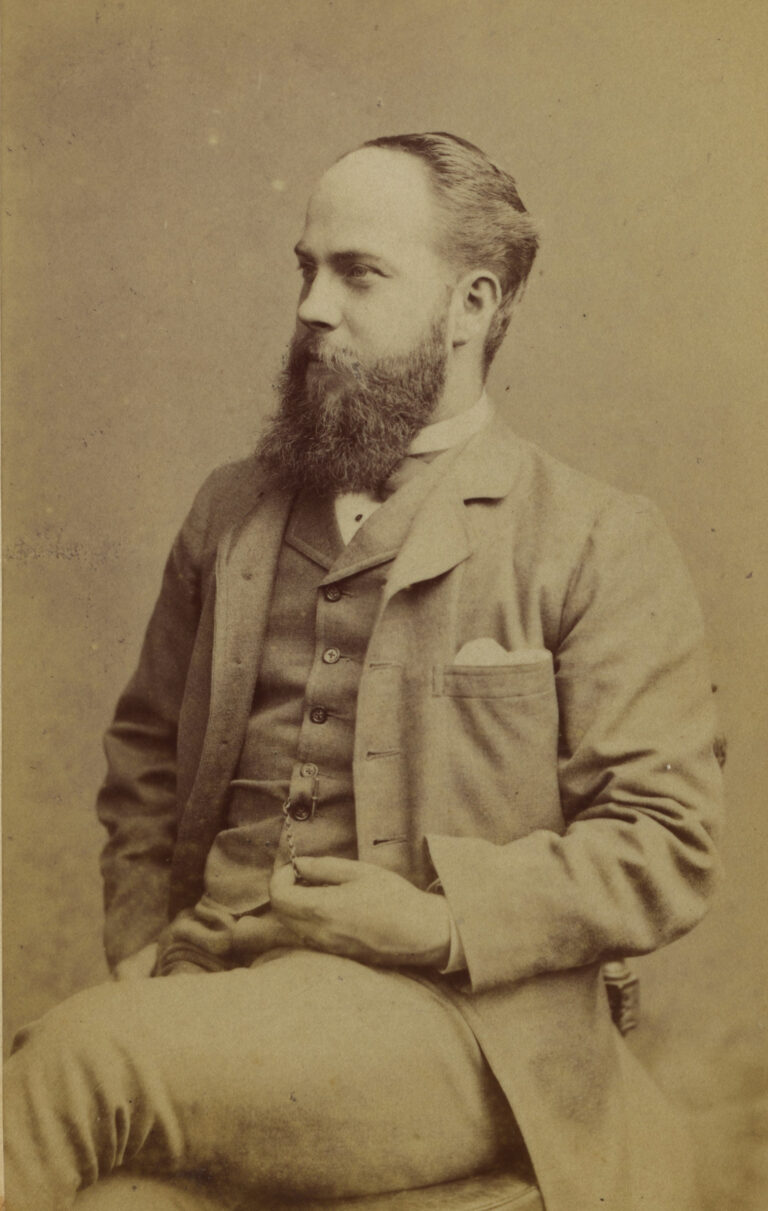
Self portrait of Reinhold Thiele. London Stereoscopic Company Studio circ. 1894
Starting out on the upper floors of 66 Chancery Lane, he would soon expand to take over No. 65. His studio was described as large, being composed of “studio offices and work rooms”. An interview from 1899 describes how successful the studio was, highlighting his work for the press, which was no doubt helped by how his studio was just minutes on foot from Fleet Street, the historical heart of British journalism and printing.
“…without a specimen, a circular, or a show case he does a business such as many a portrait photographer might envy. In fact, he is a good example of the men who have found the way out of darkest portraitdom portraiture. Though fairly remunerative, it is but a comparatively small branch of Mr Thiele’s work, the principal part of which is photography for the press.”
The Christmas Photogram – 1899
Surviving plates from this time appear to show at least two studio rooms in use. The larger of the two having decorative ceramic flooring, and the smaller with wooden flooring with a painted theatrical backdrop and a large Turkish carpet that appears through many of Reinhold’s sport photographs. Both these studios were based in the very top floor and attic of the building, with a group photograph of dignitaries attending the 1901 funeral of Queen Victoria, showing the slanting roof and large wall-length windows that he used to light his subjects.
Press Photography & Commercialisation
On setting up his own studio, Reinhold seems to have focused on chasing stories, specifically disasters, and on sports. Whereas most of his sporting photographs with Symmons had been of footballers and cyclists, from 1897 much of his sporting photographs seems to be been of cricketers. He would do coverage of most the 1897 English Cricket Season, photographing the teams together, paired with stand alone photos of the batters and bowlers.
Whilst continuing to corner the press need for sporting photography, Reinhold also experimented with disaster-photography, rushing with his sizable Dallmeyer camera and supply of glass plates to the site of the disaster, before returning to his Chancery Lane Studio to develop them and then send them to the Fleet Street Press offices to see if they would purchase them for their publications.
The first known case of this was his coverage of the 1897 Great Cripplegate Fire. This was the largest conflagration in the City of London since the Great Fire of 1666 and would destroy over 200 properties. Most surviving photographs come from Reinhold, where he would set up his camera amid the still smoking ruins.
He would continue this into 1898 with his coverage of the Metropolitan Tabernacle Fire and then the 1898 St John’s Rail Accident, which resulted in three deaths and twenty injuries. This is his sole known rail disaster photographs and captures the crushed carriages from where the trains collided in heavy fog.
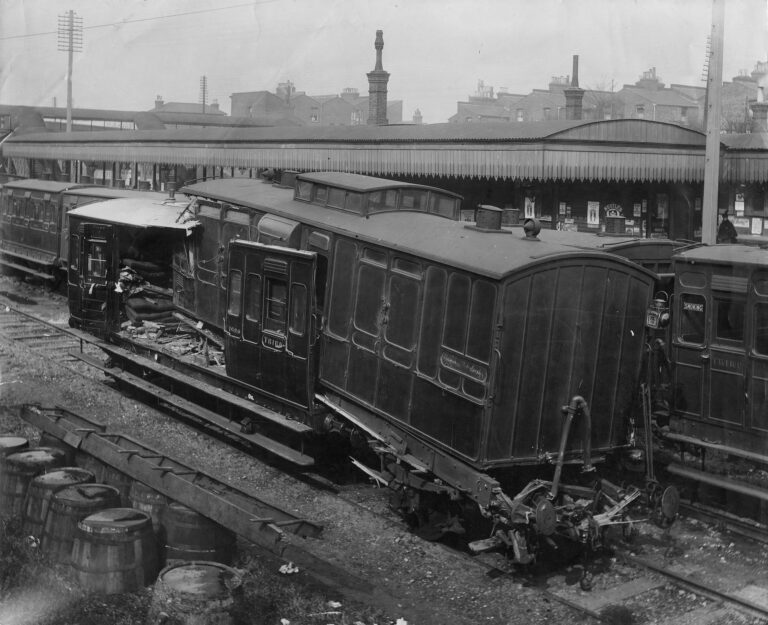
Reinhold Thiele & Co (1898) “St John’s Rail Accident”. Wikimedia Commons.
Besides his primary line of supplying photography for the press, he also continued with his celebrity photography and with licencing these images for commercial use. Whilst he continued his practice of licencing his old football and cricket photographs to cigarette companies, he also started to do this with actors and actresses.
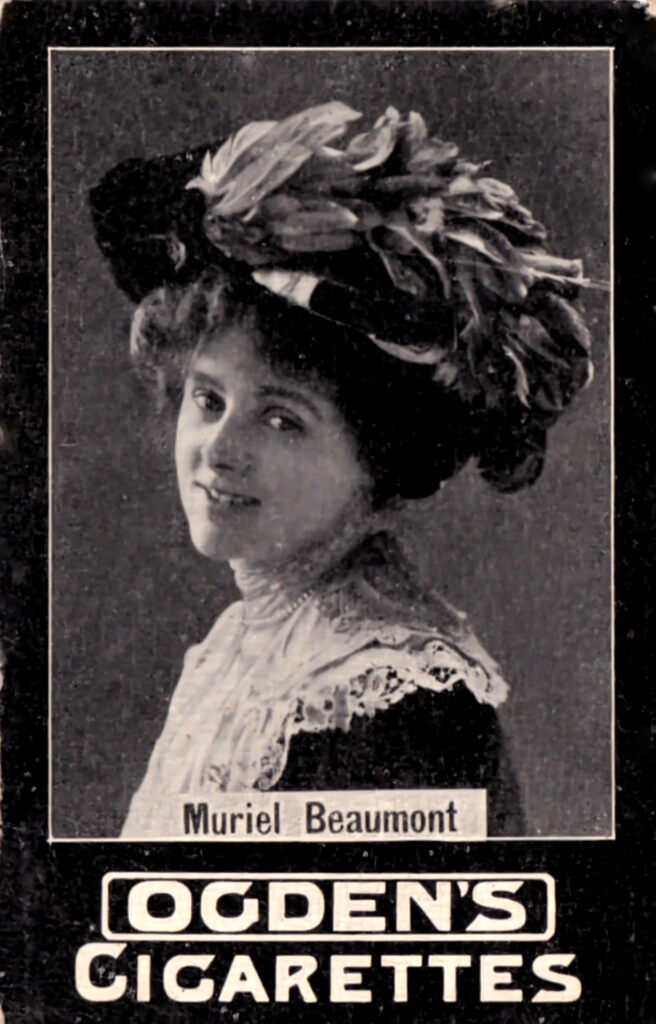
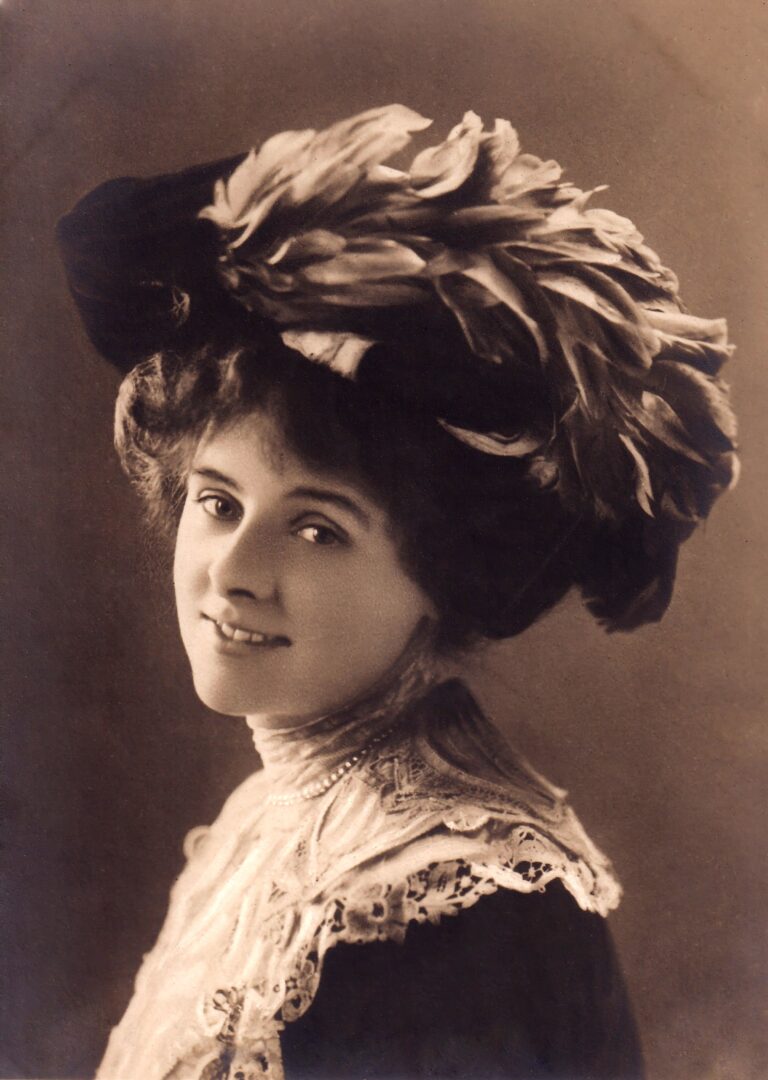
Ogden’s Cigarette Card of actress Muriel Beaumont (1876-1957) alongside original photography that Reinhold would licence to Ogden. Reinhold Thiele Family Archive.
A range of Ogden’s Cigarette Cards from this time show a number of his photographs of actresses appearing on their cards. He was also licencing them to postcard companies and would continue in this throughout the rest of his career.
Some of these photographs can also be seen in photography books, such as the Penrose Pictorial Annual and would also appear on theatre posters and marketing.
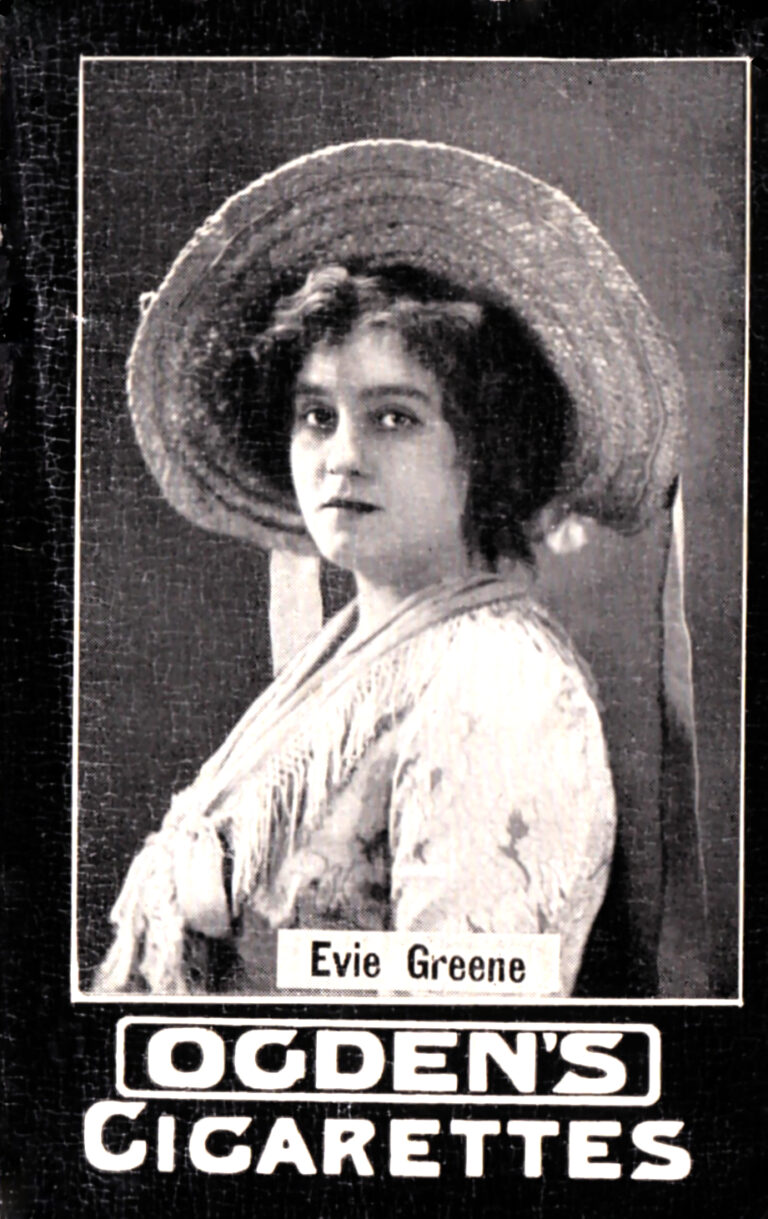
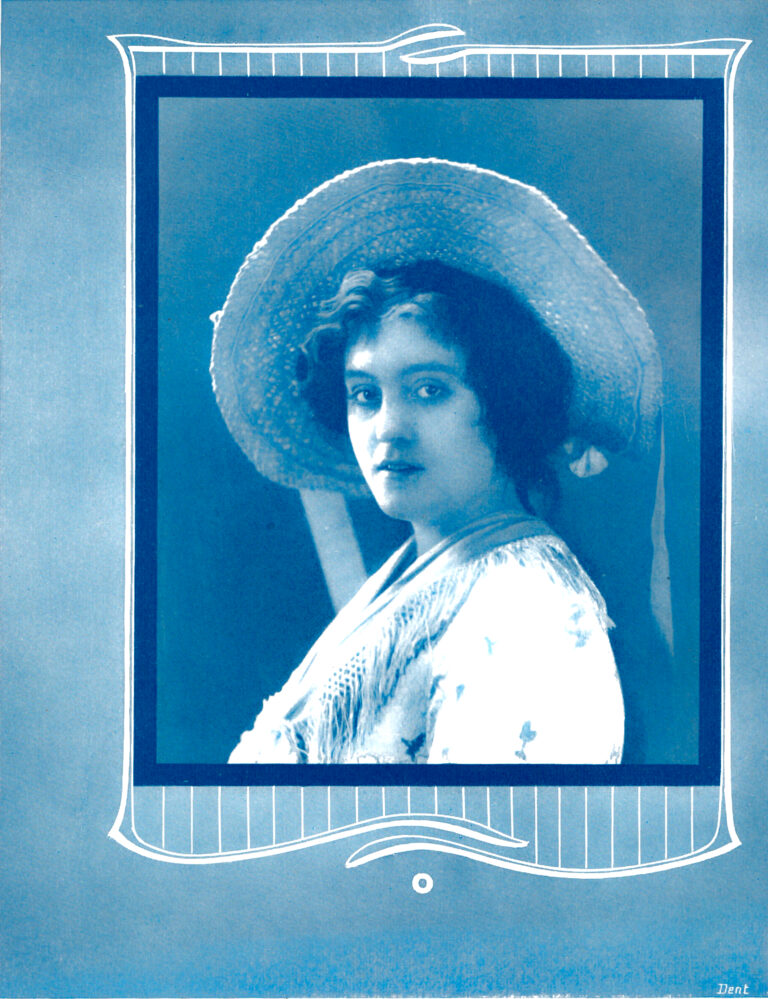
Odgen’s Cigarette Card of Evie Greene (1875-1917) alongside a decorative bookplate from the same photoshoot by Reinhold. Reinhold Thiele Family Archive.
With the size of his studio, numerous advertisements appear throughout the 1890s of him looking for assistants and apprentices to work as a part of his operations. He would also employ his children in the running of his studio. His son Percy would still be working in the studio into the 1910s, and his daughters Dora and Aileen would continue working in photography studios up until the Second World War. Perhaps one of the tragedies is that beyond his own children, there are no known surviving records of the people who worked, trained, or were apprenticed in Reinhold’s studio. This means we have lost a great resource on the direct effect that Reinhold had on those who followed after him in the world of photojournalism.
Experiments in Flash Photography
A major issue for photographers at this time was the challenge of lighting their photographs. Flash photography had been around for some time in various forms, but the use of flash powder made it cumbersome and often potentially dangerous to use. Whilst the electric-flash lamb would be patented in the US in 1899, Reinhold is known to have favoured the “Weiss Studio Flash Light Apparatus”. He spoke extensively about it in his 1899 interview for The Photogram, praising it’s use in both portraiture and larger scale outdoor photography.
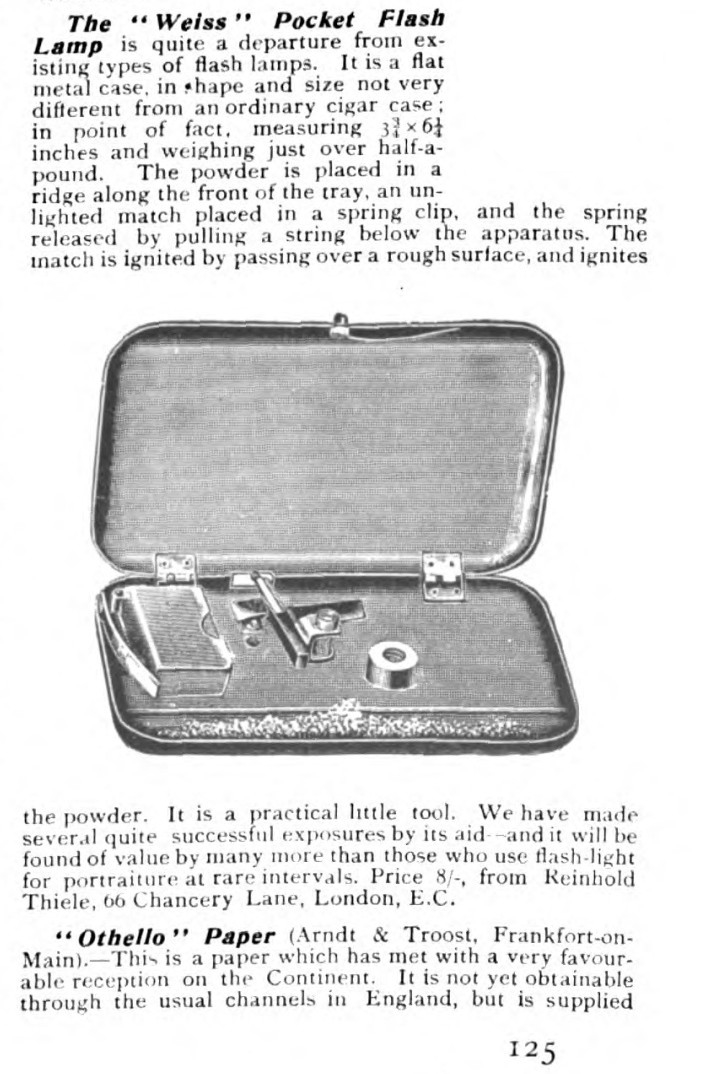
Advertisement by Reinhold Thiele for a commercial “Weiss Pocket Flash Lamp” that he sold from his Studio – The Photogram (Edition 7 – April 1900) p.125
The invention of the Weiss Flash Lamp is sometimes incorrectly assigned to Reinhold; however, it’s true inventor was the photographer, August Weiss of Strassburg. This misassignment may come from the demonstration of the Weiss System that Reinhold did for the Royal Photographic Society in 1898, of which he was a member, and he actively advertised examples of the device for sale through his studio. August patented the device in 1898, and incorporated a new smoke cap, which eliminated the earlier issue of toxic fumes and smoke being emitted with flash photography. Reinhold credits the use of the Weiss Flash Lamp with speeding up his process and removing stiffness from his photos, as it removed the need for people to pose for extended periods of time.
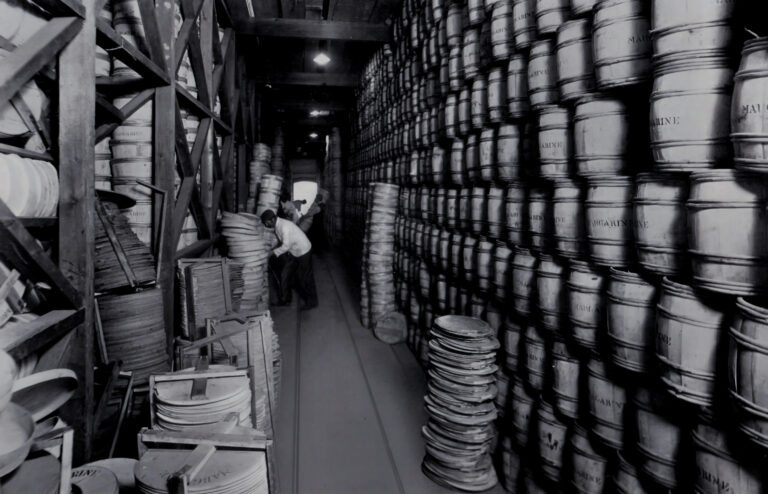
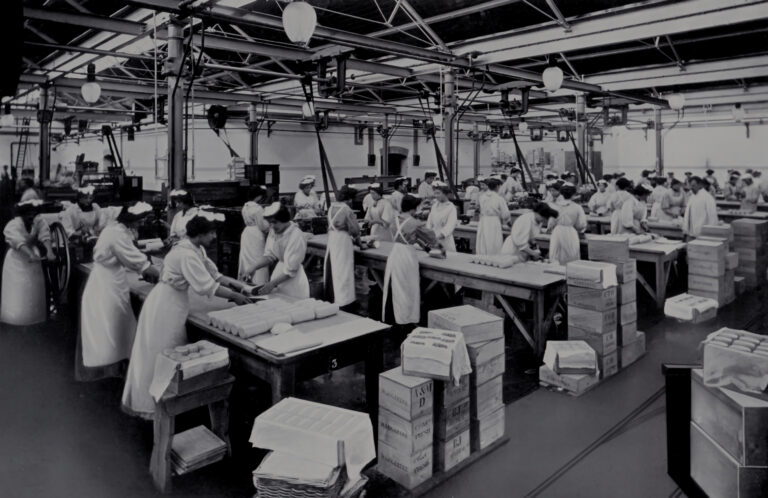
Examples of Reinhold’s use of the Weiss Flash Light for use in his industrial photography. A clear difference can be seen between these images and his earlier work for the LSC. The images are clearer, brighter and he is able to capture more complex scenes with people working. Margarine factory, Southall. Reinhold Thiele Family Archive.
The two major events that Reinhold is best remembered for covering in the 1890s, is the Diamond Jubilee of Queen Victoria in 1897, and the State Funeral of William Gladstone in 1898. Surviving photographs and news coverage show Reinhold actively covering sporting and social events, but also with a great focus on military and naval manoeuvres; his access to British battleships and life aboard them perhaps coming from his six years of service as a part of the Royal Naval Reserve.
He was also known to have experimented with using balloons for his photography and seems to have had specialist cameras for this type of work, although not always with much success; as seen below on his coverage of the 56th Boat Race between the Universities of Oxford and Cambridge in 1899.
“One of his greatest disappointments was when the ascent of The Graphic balloon at the last Universities Boat race proved impossible after he had hurriedly and with much labour and ingenuity fitted up a special balloon camera and stand”.
The Christmas Photogram – 1899
Although Reinhold did much of the camerawork at these events himself, with a studio of this size, it is almost certain that he was also sending out assistants to complete some of this work. A later court case from 1910 gives a sense of this, making it clear that when it came to Reinhold’s studio and the press interacting, that it was not always him directly interacting with them, but rather members of his team. And this can be best seen in the next chapter of his life, in the Boer War, where his studio remains open and fully operational whilst the man himself travelled to the front.