War Correspondent: The Boer War
The Boer War, or the Second Boer war, was fought between the British Empire and the Boer Republics over the empire’s influence in Southern Africa; with war being declared on 11th October 1899 and lasting until 31st May 1902.
Although War Photography had existed in various forms for some decades, and William Howard Russell’s (1827-1907) coverage of the Crimean War has him credited as the first modern War Correspondent, but it was perhaps with the advent of new breakthroughs in the world of photography, communication, and printing that allowed the role to truly come into its own during the Boer War.
With the Boer War, newspapers from across the world would send an estimated 300 war correspondents to cover the conflict, perhaps one of the best known of these being Winston Churchill, reporting for The Morning Post.
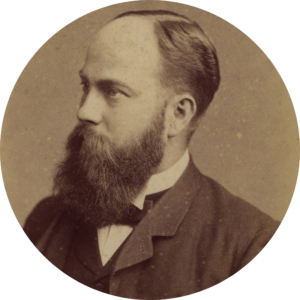
However, what made Reinhold stand out against his contemporaries, is how, although others certainly took photographs of the conflict, Reinhold was the only officially designated news photographer to cover the conflict. His son, Daniel Hugh Thiele (1901-1971), would recall that Reinhold had been commissioned for the role by the Prince of Wales, the future King Edward VII.
On the outbreak of the war, Reinhold signed a contract with The Graphic & Daily Graphic, a popular illustrated newspaper who had been working alongside for some years.
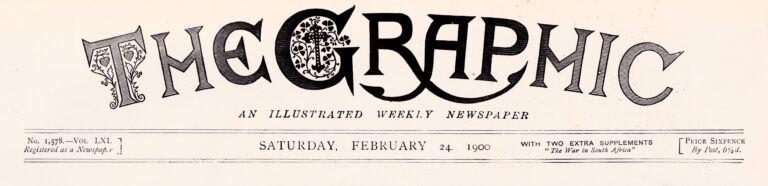
Coverage and title for “The Graphic” during the Boer War, highlighting the additional “supplements” regarding the war. Reinhold Thiele Family Archive.
In fact, Reinhold’s reputation was such, that ahead of his travelling out to cover the war, he was interviewed by journalists whilst waiting for his ship for a highly flattering article for The Photogram – Christmas 1899 Edition, thus named “Reinhold Thiele: A Man of Genius and Enterprise”. It covered his history as a photographer and earlier works, complete with photographs of him in his field kit, and extensive coverage of the types of cameras that he would be taking with him.
“At the same time, The Graphic and The Daily Graphic will be giving us scenes from the life of a soldier aboard the troopships and in the South African Veldt more varied more accurate and more complete than anything previously attempted in the field of pictorial war correspondence”.
In fact, the article was so flattering as to result in an incensed, fellow war correspondent Henry C Shelley, reaching out to the paper.
“Mr Thiele is no doubt worthy of all you say about him, but I am surprised that you should be ignorant of the fact that so long ago as October 14th I started for the front with a tele-photo lens etc. coming out as the representative of The King.
We were quite the first to think of using the tele-photo lens in connection with this war and the fact of my having that lens with me has doubtless been the means of other papers following suit.”
Modder River Camp, South Africa. 13th February 1900
It’s from this interview that we know what equipment that Reinhold bought with him to cover the war, with large 10×8 cameras being listed as his main camera type, supported with several smaller cameras, all fitted with Dallmeyer lenses. An important note from the interview is that he even had a telephoto lens on him, a more recent innovation that would allow him to take pictures from greater distances.
We don’t know when Reinhold travelled for South Africa, however, a news article from the 1st December 1899 in the Lincolnshire Chronicle referencing an “interview with Reinhold Thiele immediately before his sailing” gives us a terminus ante quem for his journey. Sailing from Southampton to Cape Town would have taken about 15 days, followed by train journey up to the British base at De Aar, a distance of 461 miles (742km) to join the First Division, commanded by Lieutenant-General Lord Methuen.
Reinhold’s coverage, which would start appearing in The Graphic in weekly instalments from 20th January 1900, would appear to have started during and in the immediate aftermaths of Britain’s defeat at the Battle of Magersfontein, fought on 11th December 1899.
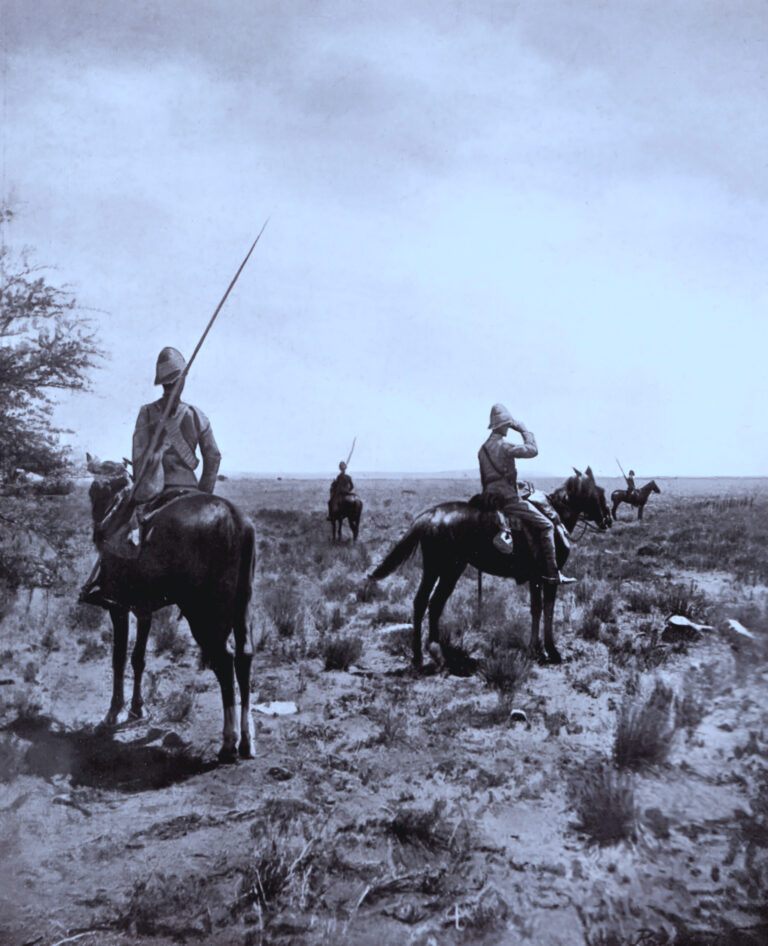
Photograph by Reinhold of the 9th Queen’s Royal Lancers at Magersfontein in the aftermaths of the battle. Reinhold Thiele Family Archive.
His photography, whilst providing traditional coverage of posing generals and reenactments of battle lines, focuses heavily on recording the day-to-day life of soldiers living and dying on the battlefront. His early coverage reaching Britain in mid-January would show a mix of captured Boer fortifications, graves, and the wounded leaving Magersfontein and awaiting treatment at camp hospitals. The Graphic made sure to pad this coverage with posing cavalry units and cheerful looking soldiers playing cricket at the De Aar camp.
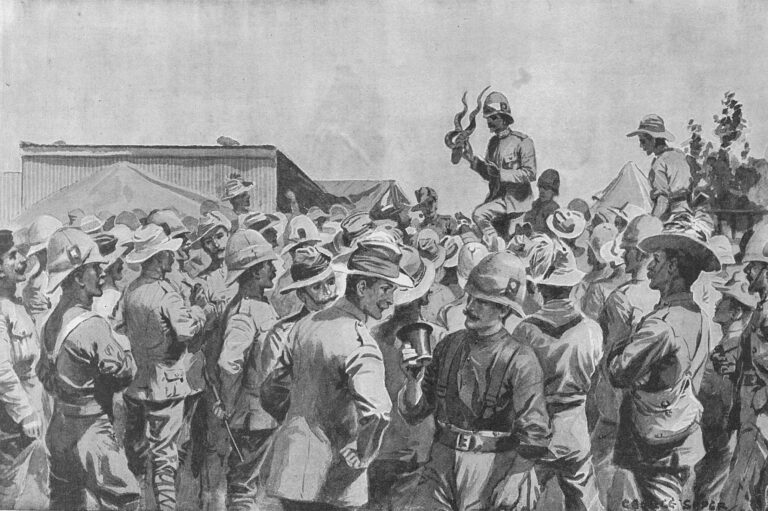
Auctioning of looted Boer goods at the British Camp. George Sopher (1870-1942) illustration of a photograph by Reinhold Thiele. The Graphic 24 February 1900 – The British Library Board. All rights reserved
His first surviving piece of written coverage discusses the distribution and sale of looted Boer goods in the aftermaths of a skirmish at Sunnyside Farm.
“The day before Christmas day Colonel Pilcher, at Belmont, got wind of a considerable Boer force at a place thirty miles away, called Sunnyside farm, and he determined to attack it before the enemy could know of his intentions.
The plan was successfully carried out; the enemy being taken completely by surprise. The fight was memorable, as the Australians were under fire for the first time, and did very well indeed.
Forty prisoners were taken, and 300 rifles, 40,000 rounds of ammunition, and a variety of other things were captured.
The loot, except the ammunition, were sold by auction a few days later in camp, where there was keen bidding for some of the articles, a young Koodoo bull’s horns producing especially lively competition.”
The Graphic – 24th February 1900. The British Library Board. All rights reserved.
It should be noted that the actual date of the engagement is likely incorrect. A participant, Private Conway Drew, noted in his diary that the events at Sunnyside took place on 1st January 1900.
Although the First World War is better remembered for the monarch sending chocolate to the troops abroad, the Boer War was the first time this was done. With his time spend in the frontline hospitals, Reinhold was able to capture this moment as nurses handed out tins of chocolate sent by Queen Victoria to the troops.
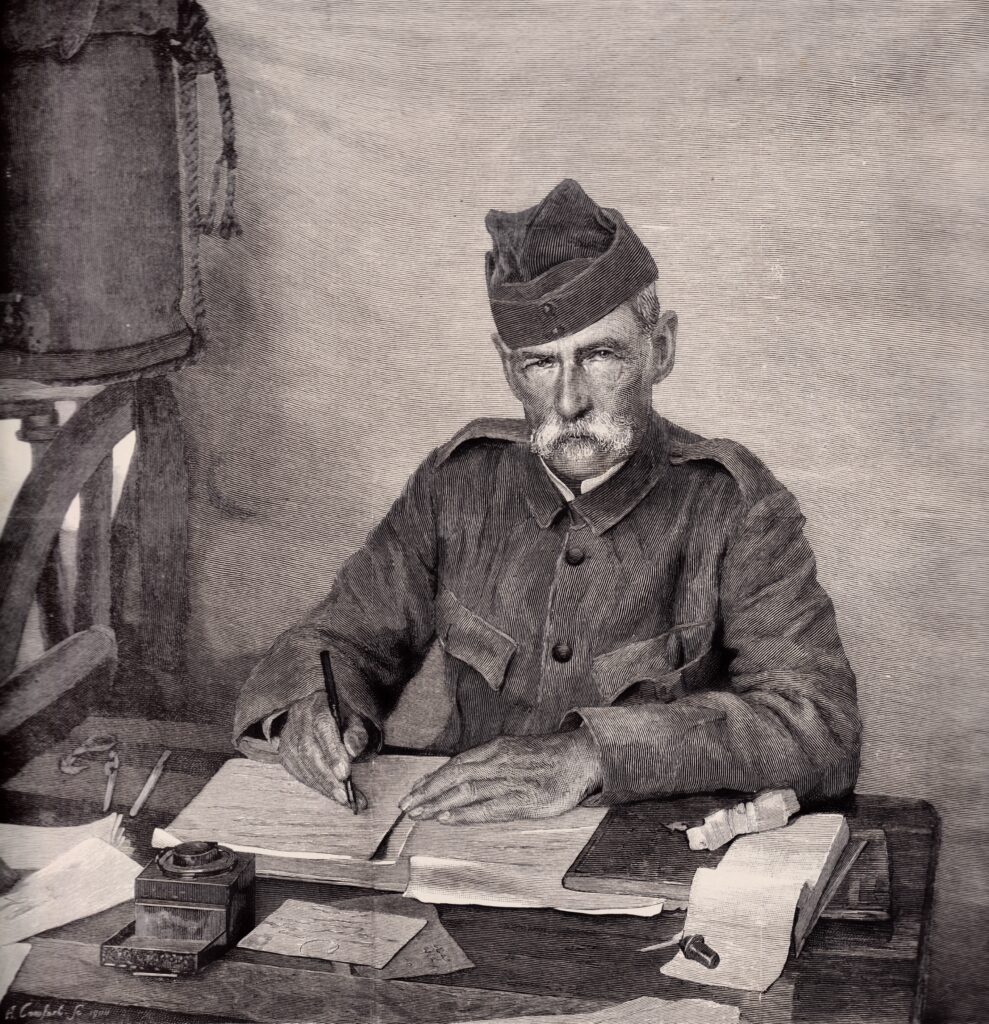
Field Marshall Lord Roberts in his tent ahead of the Battle of Bloemfontein. Engraving taken from a photograph by Reinhold Thiele. Reinhold Thiele Family Archive
It was during this almost lull in the war as Lord Methuen awaited the arrival of Lord Roberts in Britain that Reinhold secured a new contract with another paper. Although best known for his work for The Graphic, from 3rd February 1900, he started a new contract alongside The Graphic, for the Golden Penny. Perhaps the reason for his work for the Golden Penny being so little known is that this weekly illustrated newspaper was a short-lived publication, only running between 1896 and 1903.
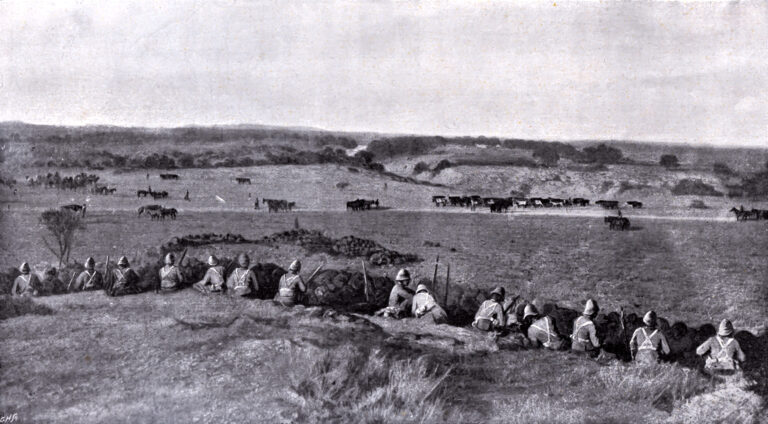
British and colonial troops holding trench lines at Paardeberg. Halftone Print from a photograph by Reinhold. Reinhold Thiele Family Archive.
The larger part of Reinhold’s coverage picks up with the raising of the 124-day Siege of Kimberley on 15th February and the major British victory at the Battle of Paardeberg (18-27th February 1900). On the raising of the siege, Reinhold photographs the Great Pit at Kimberley Diamond Mines and covers the Battle of Paardeberg with photographs of troops in action, wounded returning to the hospitals, and prisoners of war.
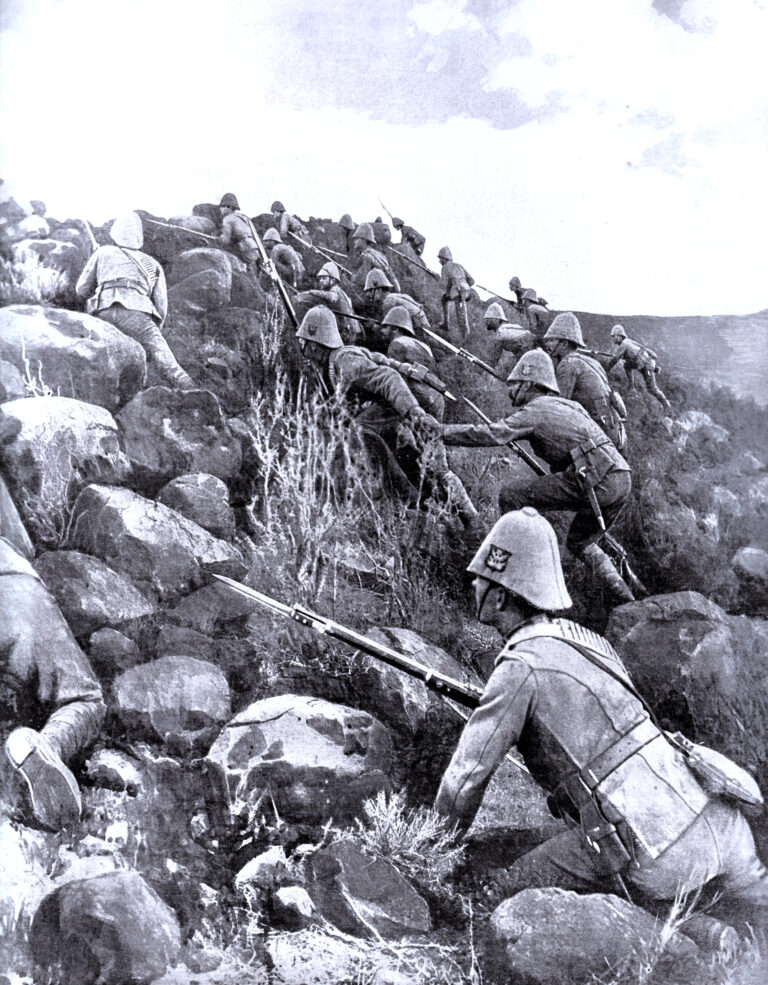
C Company of the Royal Canadian Regiment under the command of Captain Rybert Kent Barker preparing to storm a Boer trench during the Battle of Paardeberg (21 February 1900). Halftone print from a photograph by Reinhold. Reinhold Thiele Family Archive.
At Paardeberg, the British capture 4,019 prisoners of war, and Reinhold takes many photos of them as they await being transported to the port camps in Cape Town, Simonstown, and Durban. With most of these photographs now existing in the Getty Collection, it is not fully clear if all these photographs are of prisoners of war, or if some may also be of the British use of concentration camps.
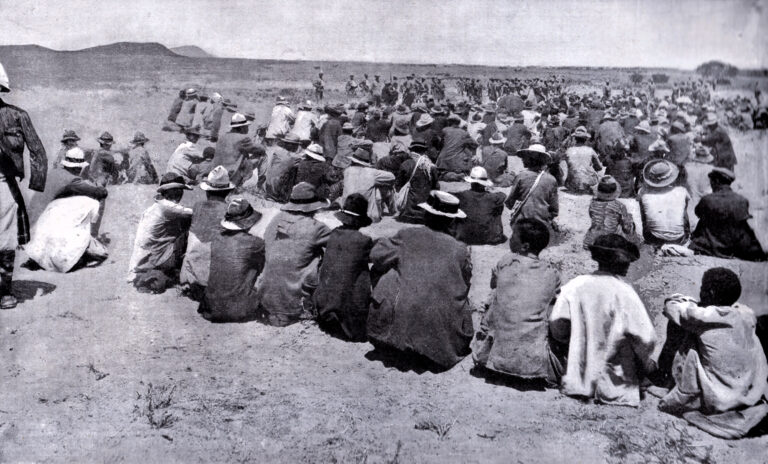
Photograph by Reinhold of Boer prisoners awaiting processing in the aftermath of the Battle of Paardeberg. Halftone print – Reinhold Thiele Family Archive.
For the rest of the war, Reinhold’s coverage remains a mix of classic photojournalism, with photographs of Lord Roberts and his staff, and of the captured Boer general, Piet Cronjé, but also of the wider environment, with views of the Modder River and abandoned Boer tunnels and trenches.
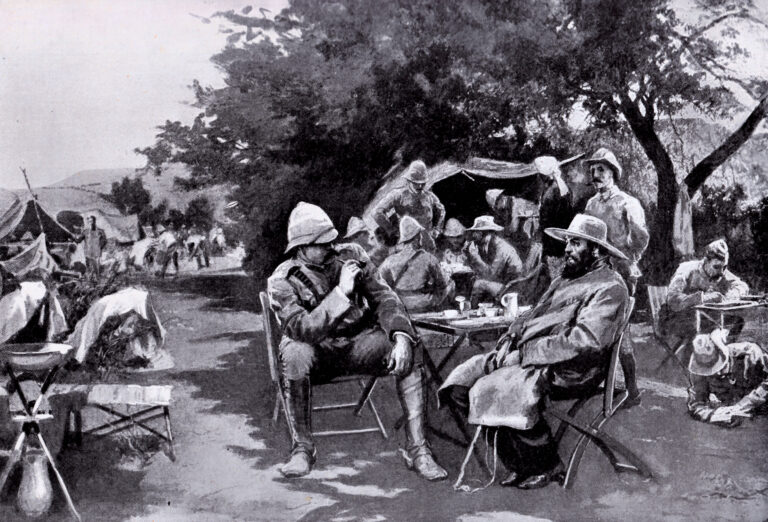
The captured Boer general, General Cronjé being held at the British camp. Illustration taken from a photograph by Reinhold. Reinhold Thiele Family Archive.
Perhaps the most important photograph of his time covering the war, was a self-portrait. The original, an 18.4 x 24cm Gelatine silver print, sits as part of the National Trust Collection at Gunby Hall, and once belonged to Field Marshall Sir Archibald Montgomery-Massingberd (1871-1947), who likely knew Reinhold.
The image captures a slightly dishevelled Reinhold gazing into the distance as he sits before his tent, a covered ox-drawn wagon, with the words “The GRAPHIC and Daily Graphic Special Photographer” resting in the background.
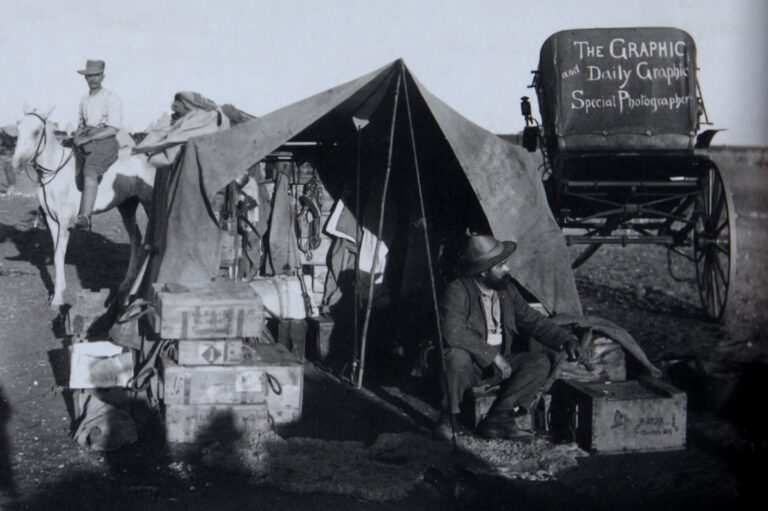
Self-portrait of Reinhold Thiele in his tent, surrounded by crates of glass negatives. Similar to the larger National Trust Collection copy – smaller trimmed copy passed down to his granddaughter Ella Mai Rose. Reinhold Thiele Family Archive.
What makes this image special is how it captures the essence of Reinhold working in the field as a war correspondent and early photojournalist. It feels completely different in composition to the images of his contemporaries at the front, who oft appear stiffly posed and in staged in their own shots. This image truly captured how he lived and travelled along the front during the 8-months he was there. A tent, packed with wooden chests of chemicals and glass slides, gun holsters and the creature comforts of spare clothes and animal skins.
Besides his journalism work, Reinhold continued in his now established practice of licencing his photographs out for commercial use, besides that of journalism. He would licence several of his images for use with Ogdens Cigarette Cards and for postcards. Of interest is how he was not just licencing these images to the British, but also directly to the Boers. Several examples exist where Reinhold licensed the use of his portraits of Boer General Christiaan de Wet to Boer postcard companies.
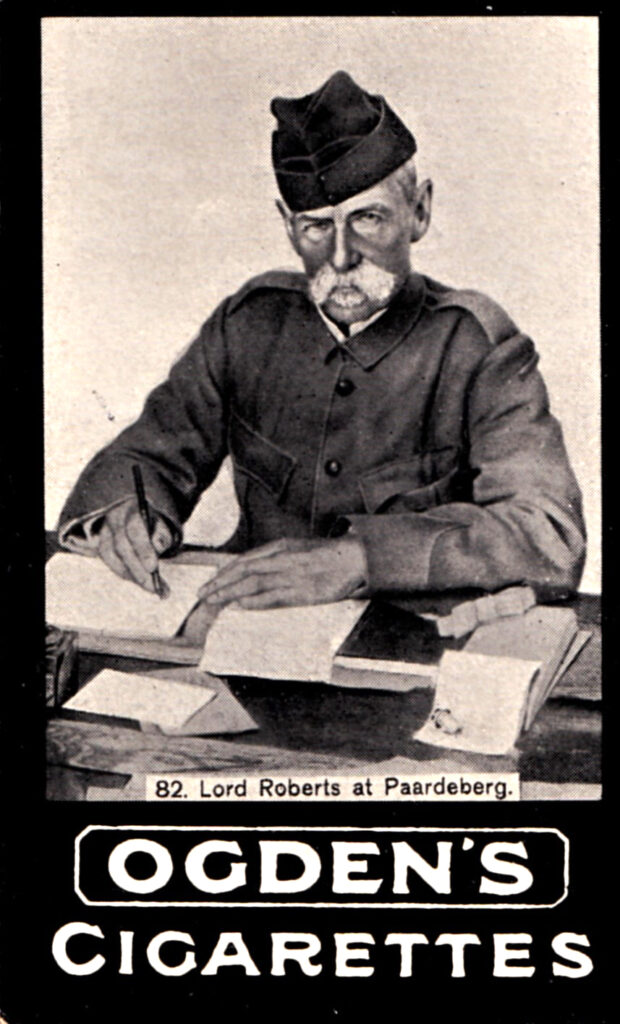
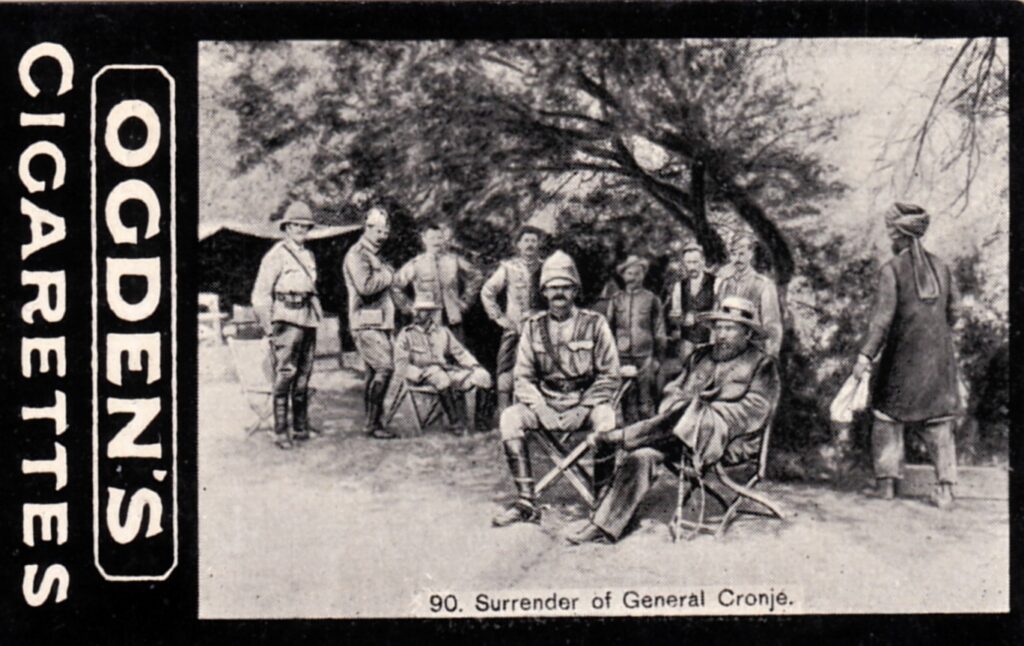
Ogden’s Cigarette Cards using photographs of Lord Roberts and the surrender of General Cronje taken by Reinhold. Reinhold Thiele Family Archive.
Reinhold’s exploits as a war journalist were being picked up by American audiences and as such he exploited this to licence his images to “Underwood & Underwood”, a US based stereoview and photography company. The images he licensed to them were likely sold as parts of the company’s box sets on the Boer War conflict, which were made to capitalise on an American audience fascinated by the war. His face appeared on the frontpages of US newspapers and introduced his work to a whole new audience on a continent he would not visit until 1908.
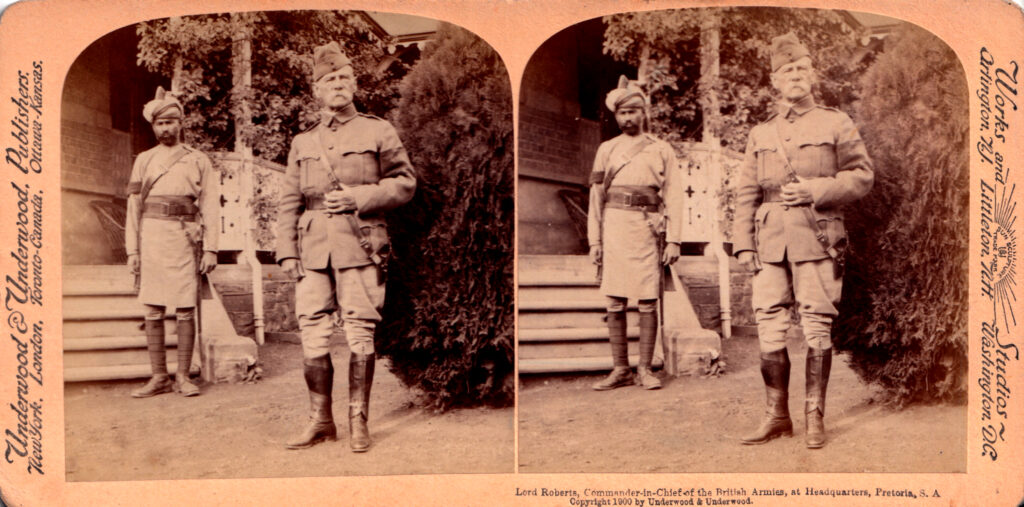
Underwood & Underwood stereoview using photographs licensed by Reinhold of Lord Roberts. Reinhold Thiele Family Archive.
His last piece of coverage of the Boer War came out after he had finally returned to London, appearing in The Graphic, on the 18th August 1900, and was not focused on battles, but rather the Typhoid Epidemic that was ravaging the troops at the front.
“The photograph I send you,” writes our special correspondent, Mr Reinhold Thiele, “represents a portion of the great number of graves of soldiers who succumbed to enteric fever at De Arr.
This mode of burial stands in strong contract to that practiced at Bloemfontein, where the enormous number of fatal cases, which on one occasion reached seventy-one, and on another sixty-three in one day.
Had for all the most part to be buried in trenches. During the worst period of this epidemic, when about 8,000 cases were being treated at Bloemfontein, the average number of deaths amounted to twenty-two per day.
Coffins could only be provided in few cases and in these it was generally by (?) subscription. To the untiring work and devotion of the scantily represented Medical Staff and nurses we may safely ascribe the fact that the death rates did not reach far greater proportions…”
The Graphic – 18th August 1900. The British Library Board. All rights reserved.
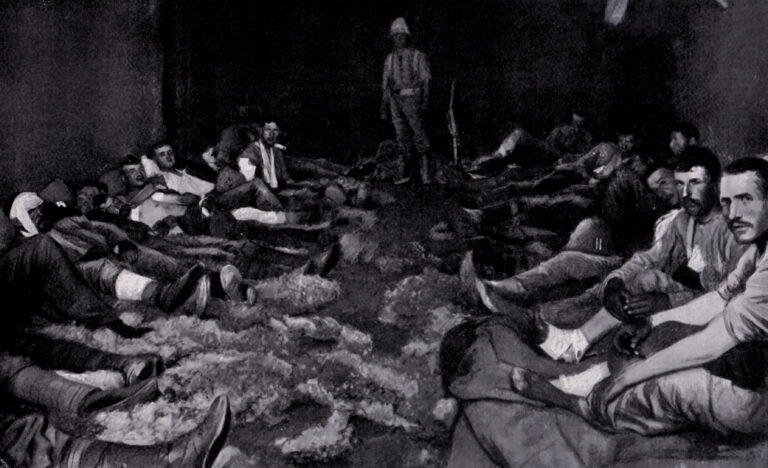
General French’s wounded soldiers, left at Waggon House, Klip’s Drift. Halftone print. Reinhold Thiele Family Archive.
We can’t be fully certain of when Reinhold finally left for Britain, but it seems it was in late-June or July 1900, after the Battle of Diamond Hill, which was one of the last-pitched battles of the war.
What we do know comes from photographs that he took during his return journey on the ship home, which show him mixing with other war correspondents and journalists who were also returning, one of note being Lady Sarah Wilson (1865-1929), one of the first female war correspondents in history. Another person of note who Reinhold would meet and photograph on the return journey was Sir Arthur Conan Doyle (1859-1930), the famed creator of Sherlock Holmes, who had served in the war as a doctor.
On returning, The Graphic would compile Reinhold’s accounts and photography and publish them alongside other accounts of the war in a special edition hardback book called “The Graphic: History of the South African War 1899-1900”, selling it by pre-order for the princely sum of 5 Shillings.